
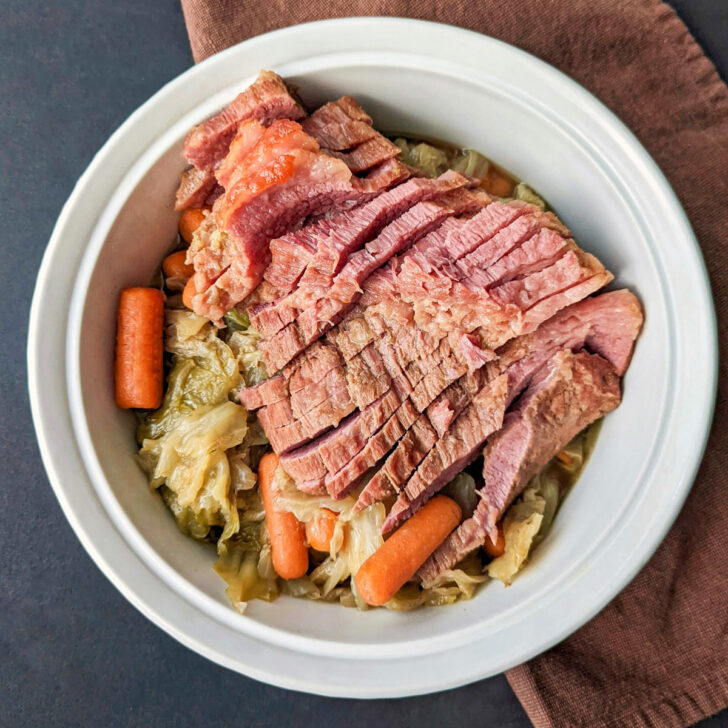
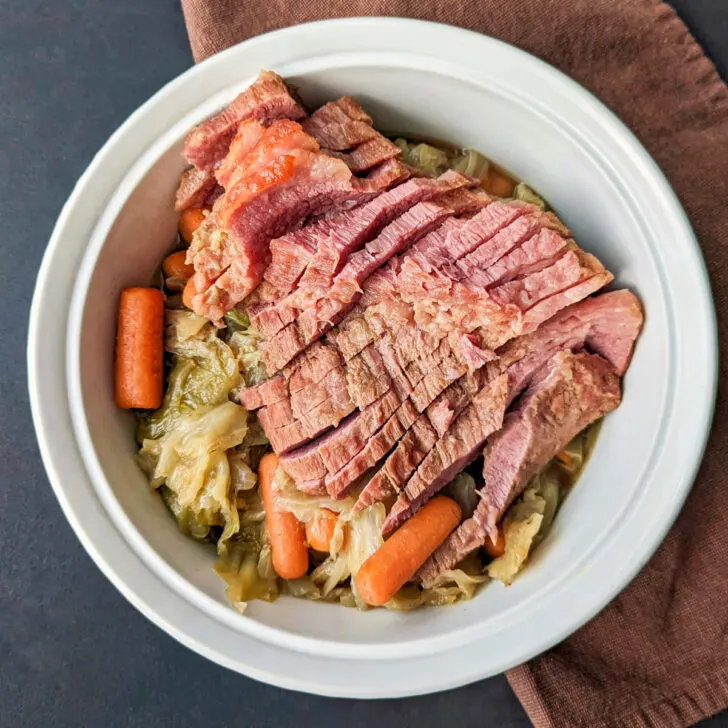
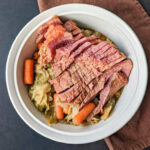
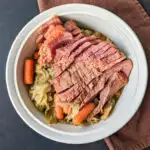
Dutch oven corned beef and cabbage is a hearty, melt-in-your-mouth, one-pot meal. Put the ingredients in a Dutch oven to roast until they are fall-apart tender to make a classic meal – perfect for serving a crowd or celebrating St. Patrick’s Day. And you can use the leftovers to make Reuben, sliders, corned beef and cabbage egg rolls, salads, or corned beef hash.
The Tradition of Corned Beef and Cabbage
It may come as a surprise to some, but this meal has its roots in America. In the late 19th century, food experts say Irish immigrants substituted corned beef for bacon, the preferred meat in their home country.
Ingredients You’ll Need
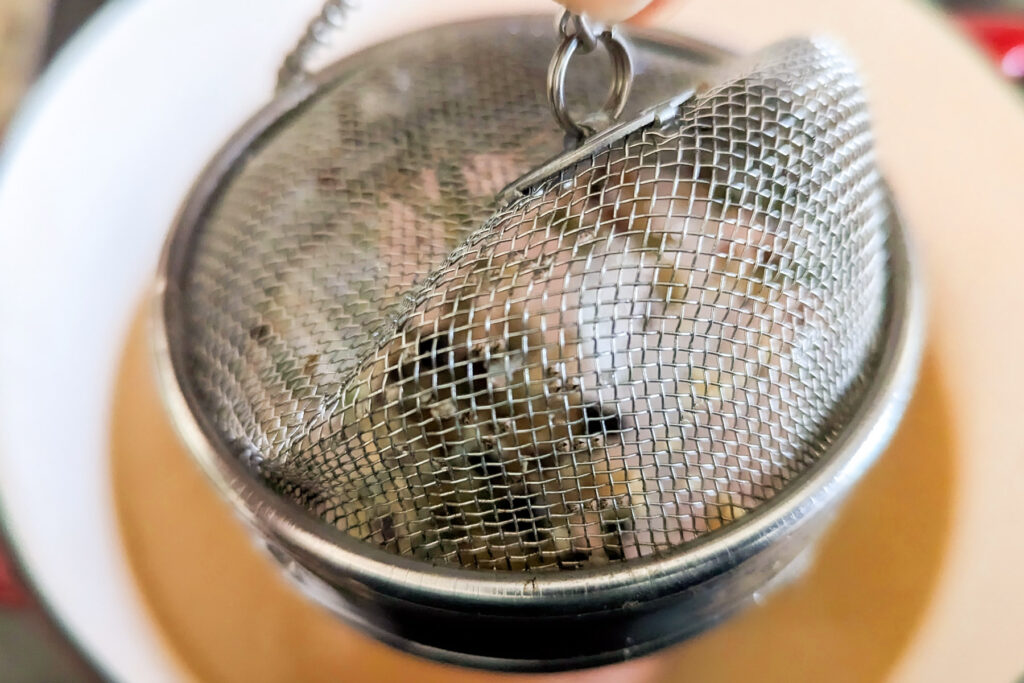
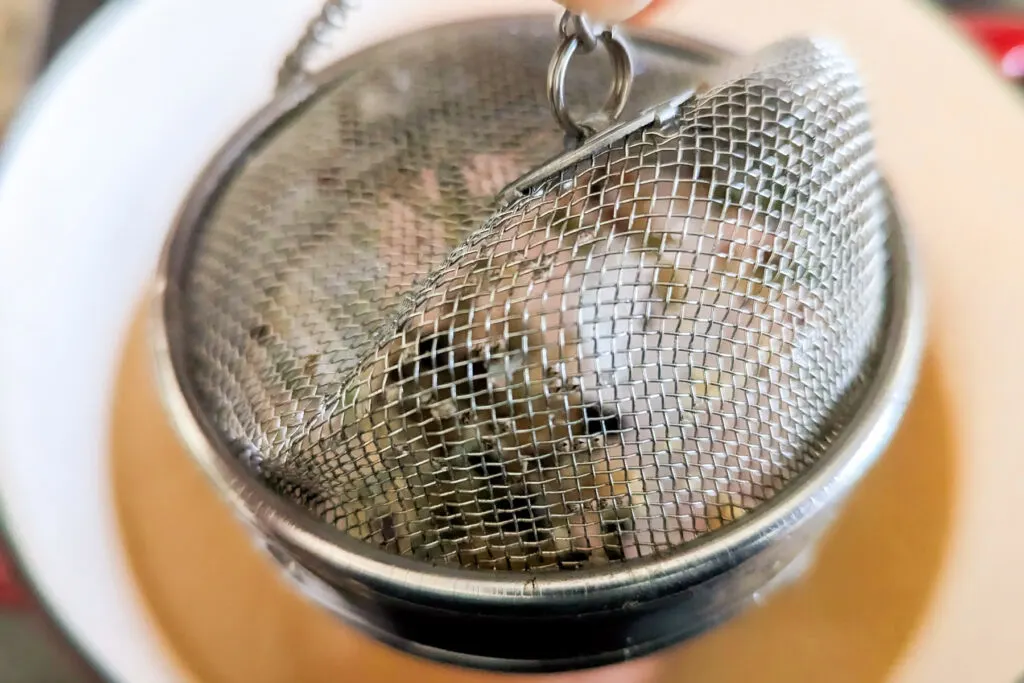
- Whole Spices: A spice packet comes with the beef, but I like to use a homemade combination of spices. Fill the spice ball with black peppercorns, yellow mustard seeds, coriander seeds, black cloves, allspice berries, and bay leaves for easy clean up.
- Corned Beef: The meal starts with tender, juicy beef brisket! A store-bought 3 to 4-pound flat-cut corned beef brisket feeds my family of four the best Dutch oven corned beef and cabbage with leftovers. Learn how to corn beef brisket at home from America’s Test Kitchen; the process takes about six days.
- Beef Stock: Simmer beef brisket in a Dutch oven with beef stock. Some recipes also use vegetable stock or a dark beer like Guinness.
- Spices: Ground ginger and brown sugar sweeten the otherwise salty beef.
- Vegetables: Cook the brisket with petite potatoes, carrots, and cabbage to make it a complete meal.
Tools Used to Make this Recipe
All you need for any Dutch oven corned beef and cabbage recipe is an enamel or cast-iron Dutch oven (like the one pictured). I also recommend a good pair of oven mitts to lift it in and out of the oven.
How to Make Dutch Oven Corned Beef and Cabbage
The full recipe with measurements is in the recipe card below.
Step 1: Preheat the oven to 325°F (162°C) and fill a spice ball with the whole spices. Set it aside.
Step 2: Remove the corned beef from its packaging and discard the brine and spice packet. Rinse the meat to remove excess brine, and place it into the center of a Dutch oven fat side up.
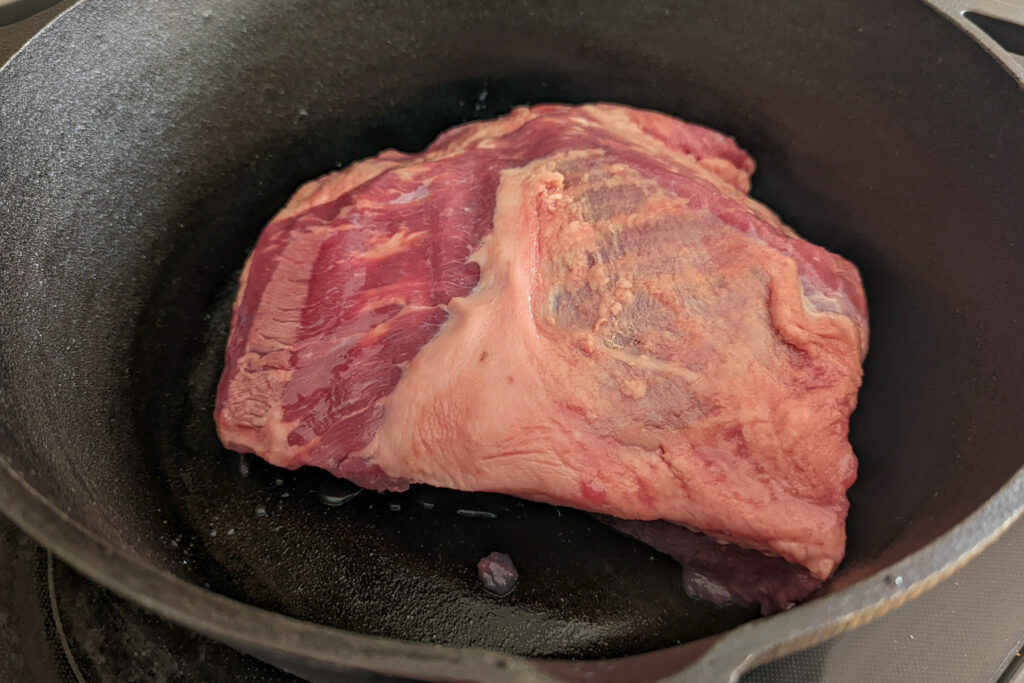
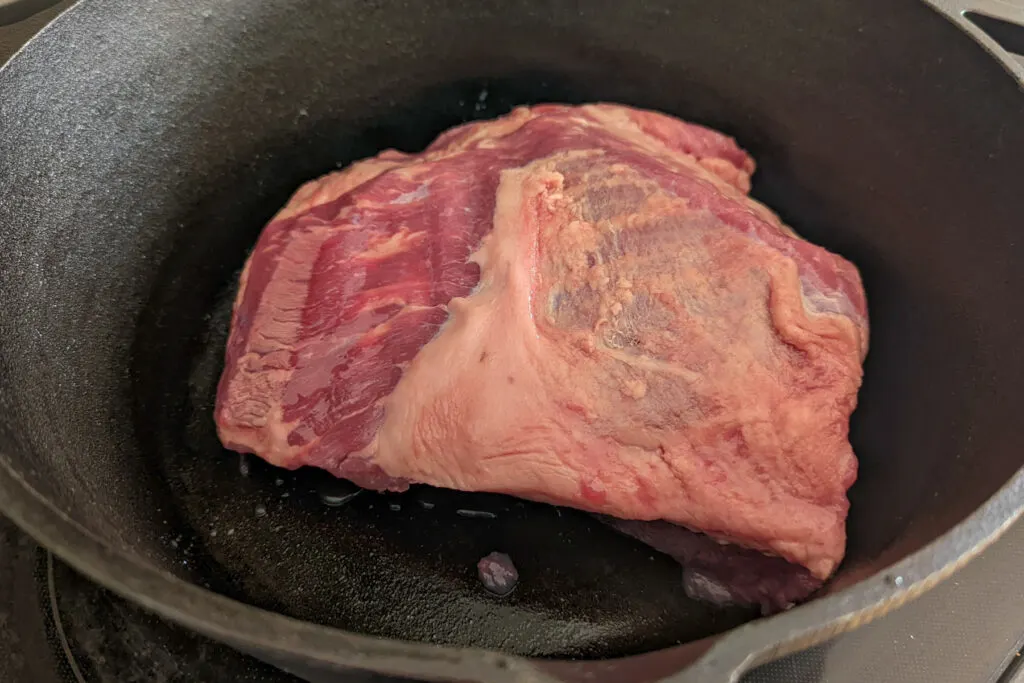
Step 3: Add beef stock, ground ginger, and brown sugar. Stir to combine, then bring the mixture to a boil over medium heat. Nestle the reserved spice ball into the pan, cover, and bake for 2 hours.
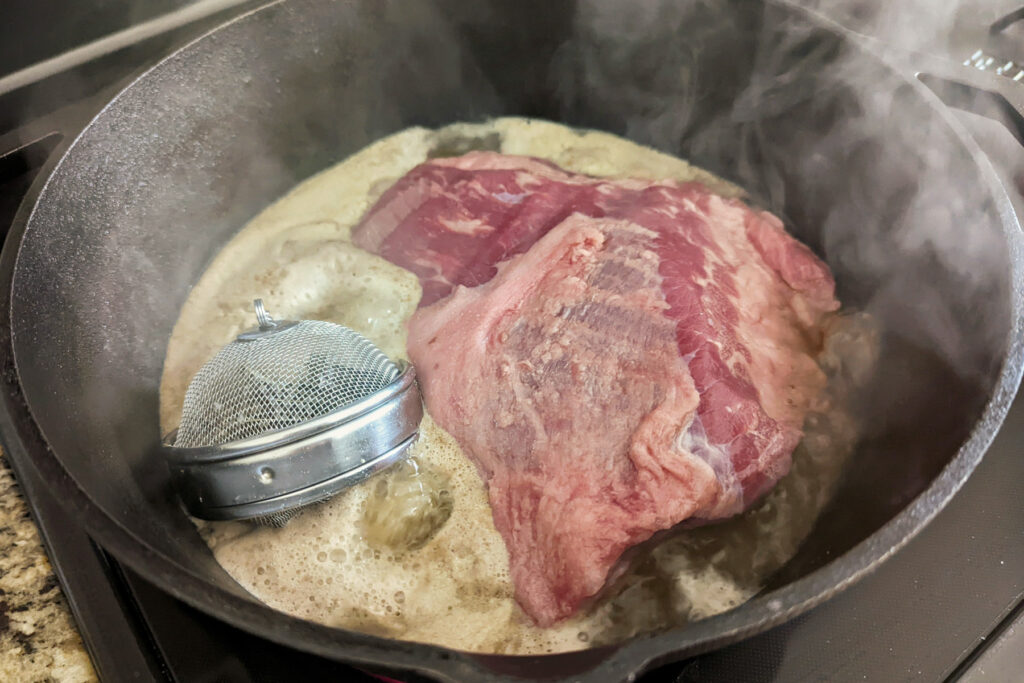
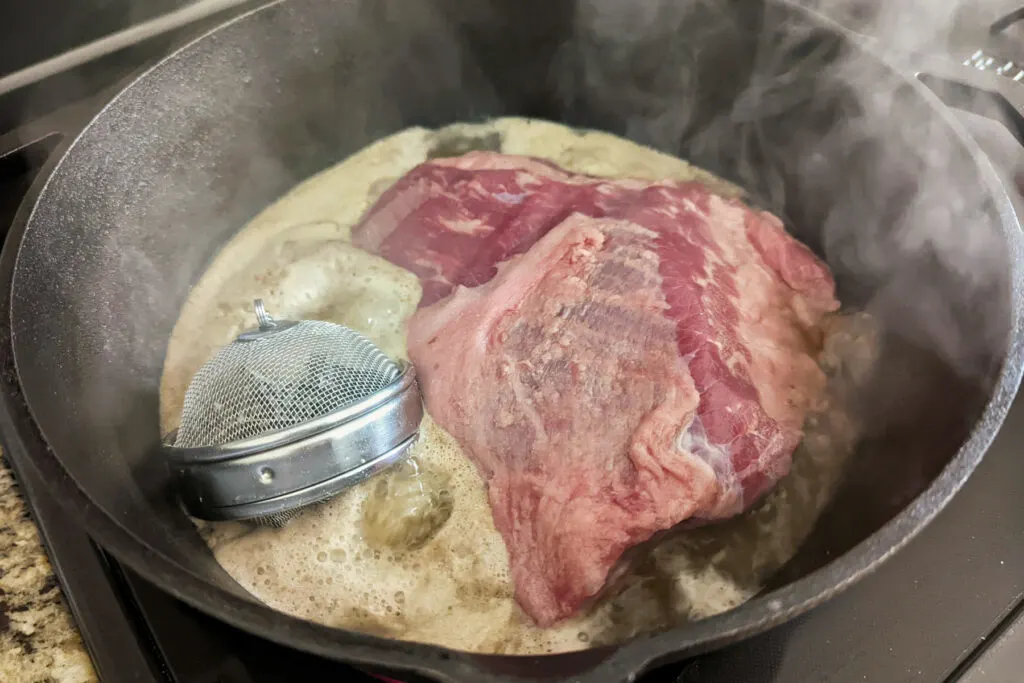
Step 4: Remove the pan from the oven and arrange the potatoes, cabbage, and carrots around the brisket. Bake uncovered for another hour.
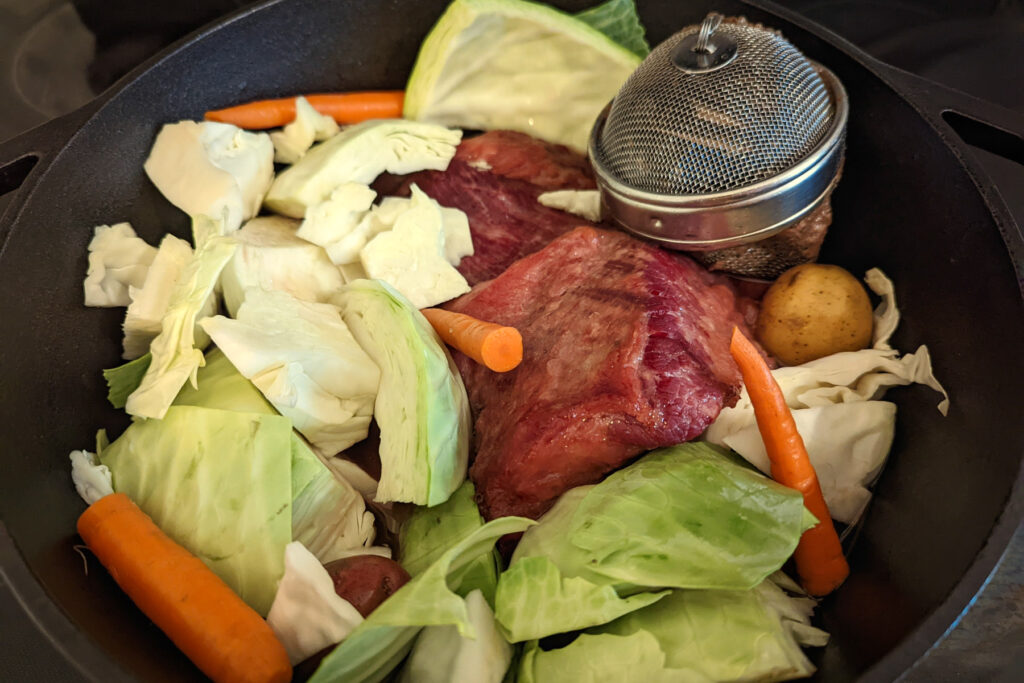
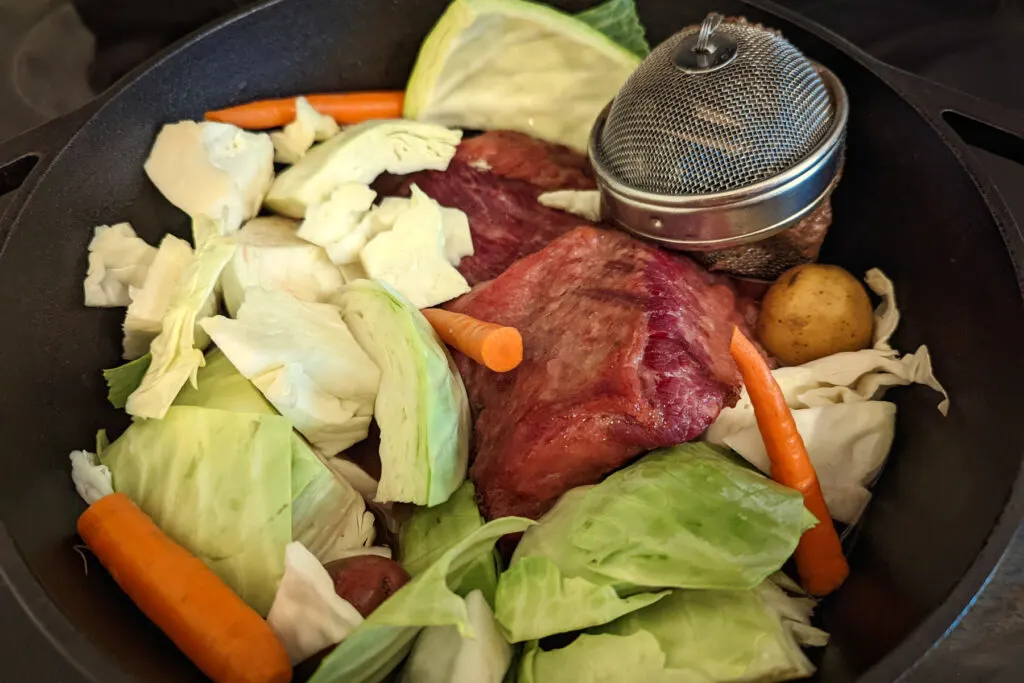
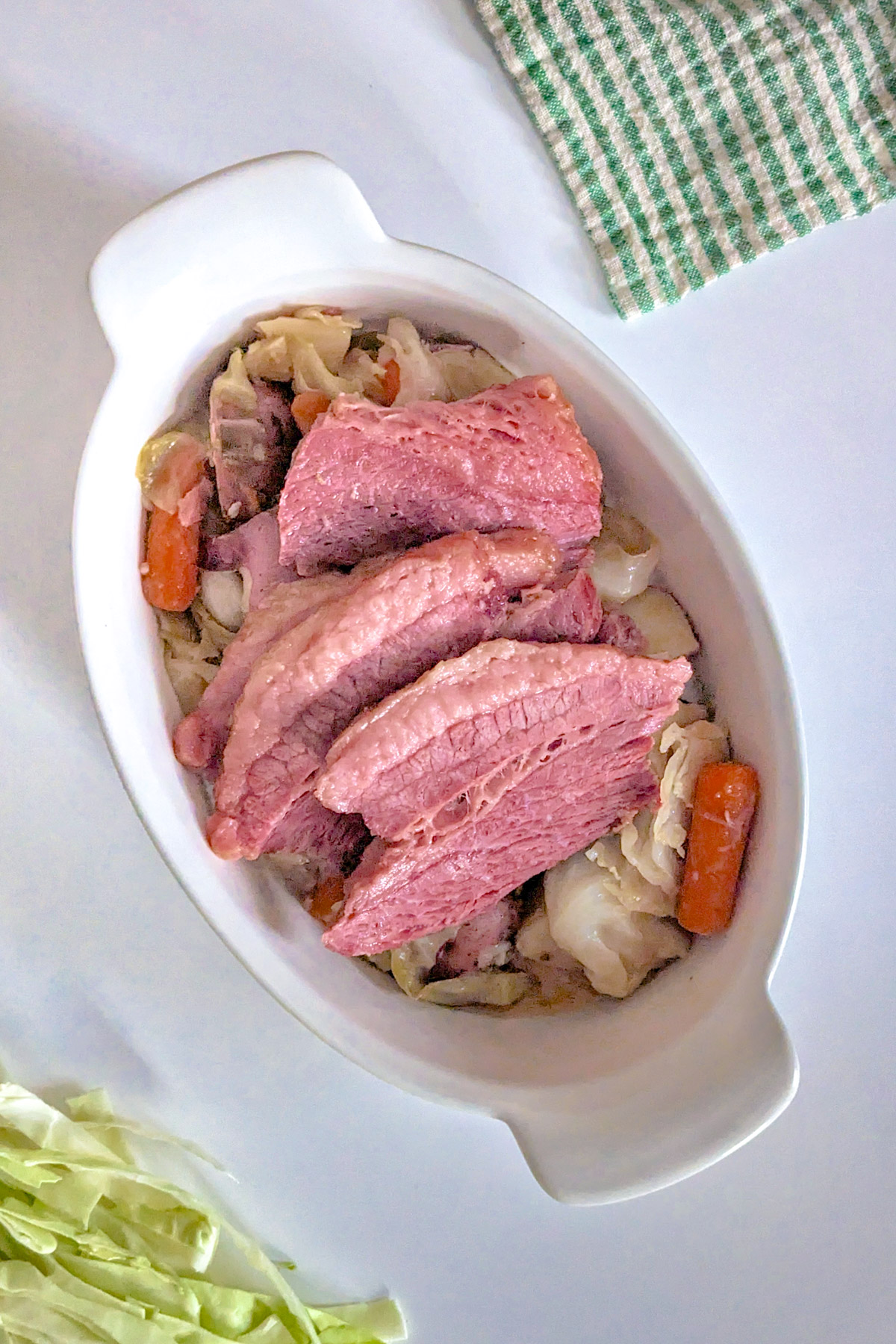
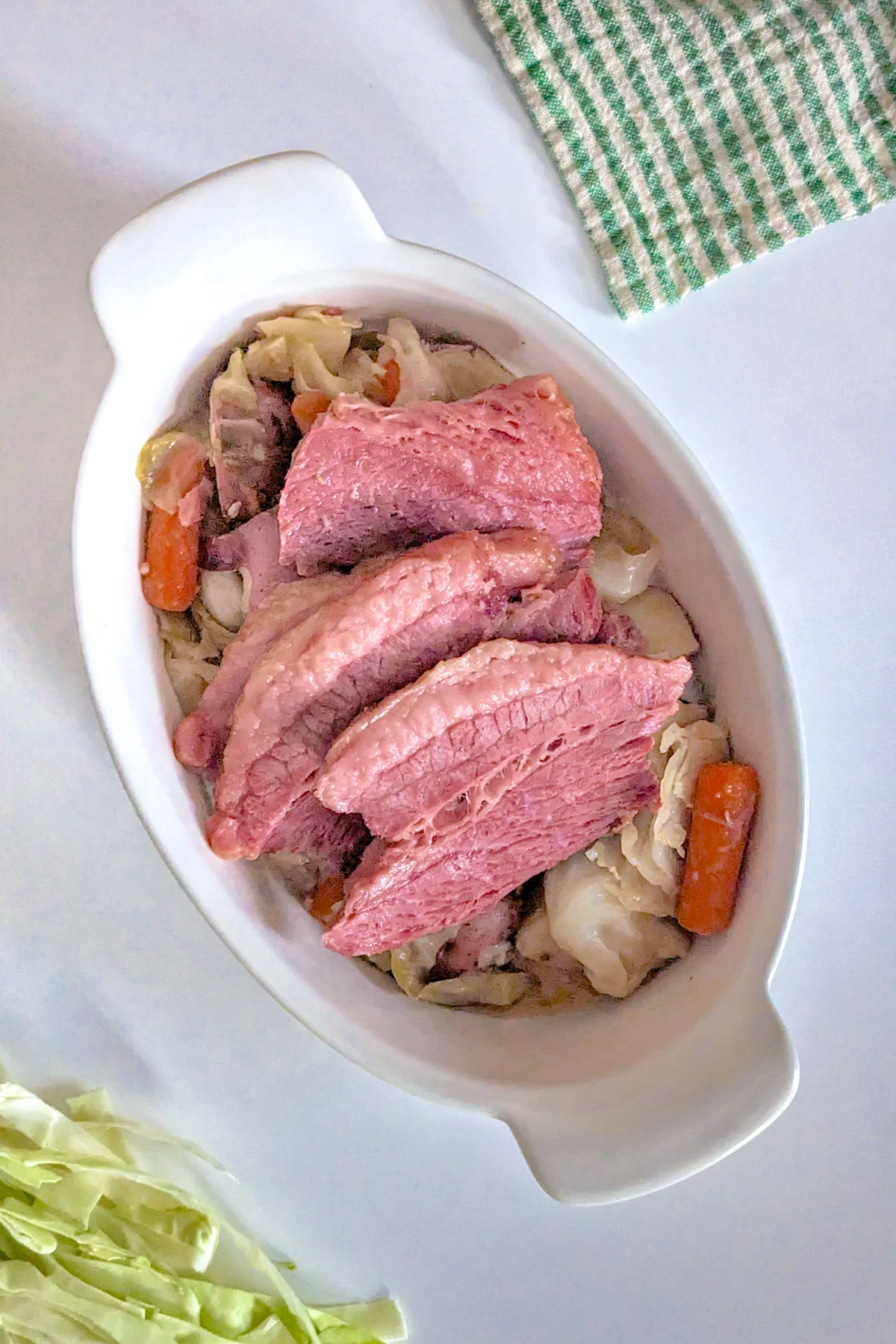
Step 5: Transfer beef to a cutting board and let it rest for 10 minutes on a cutting board before carving. Meanwhile, drain the broth and arrange the vegetables into a serving dish.
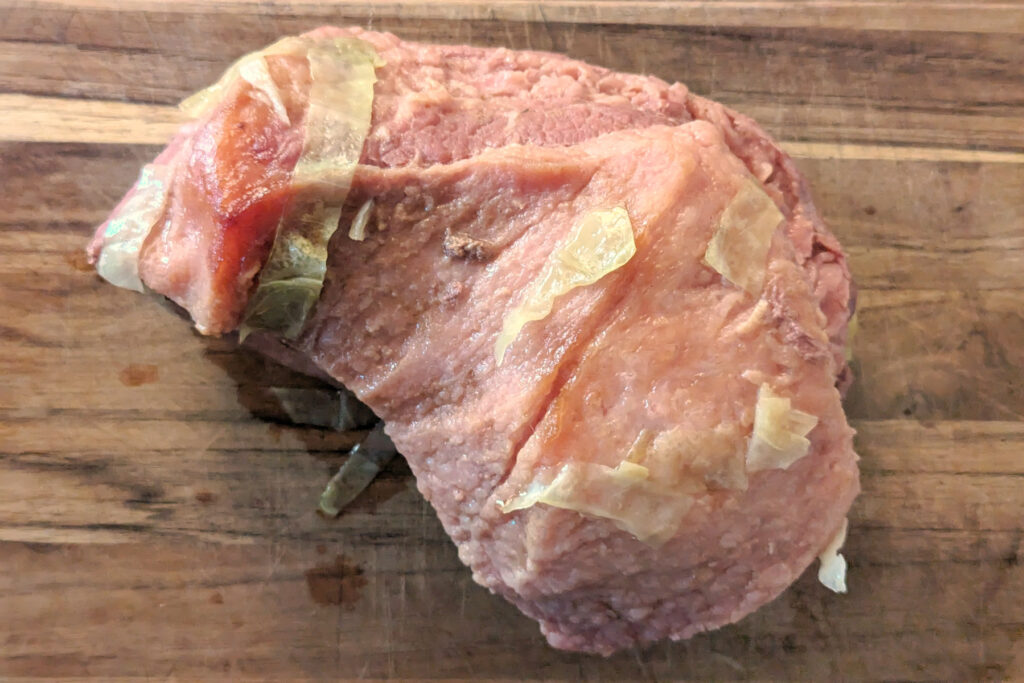
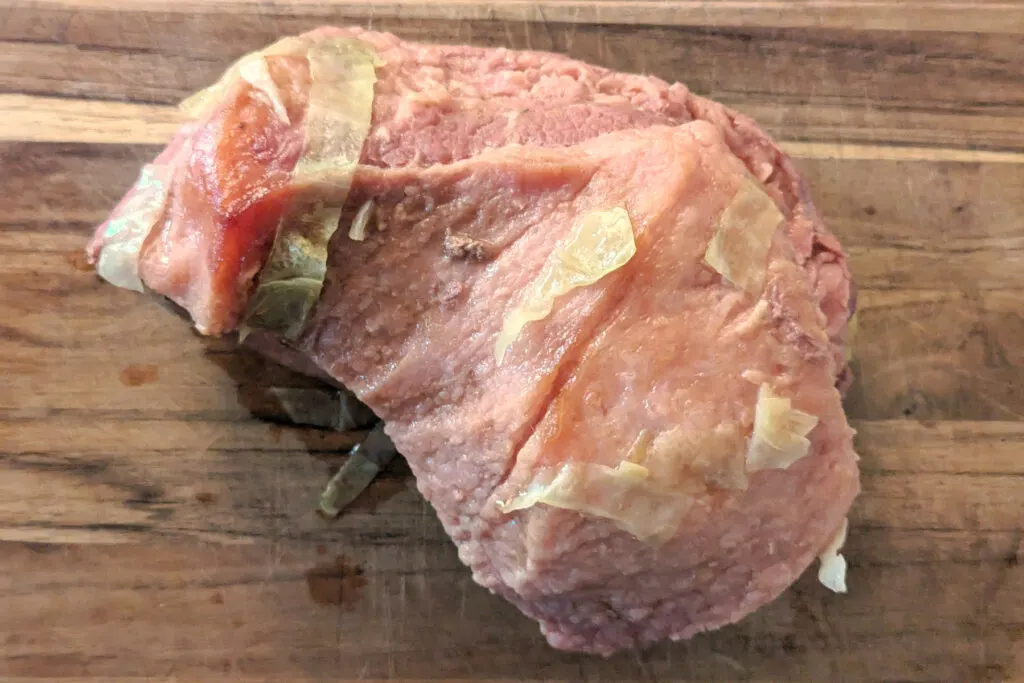
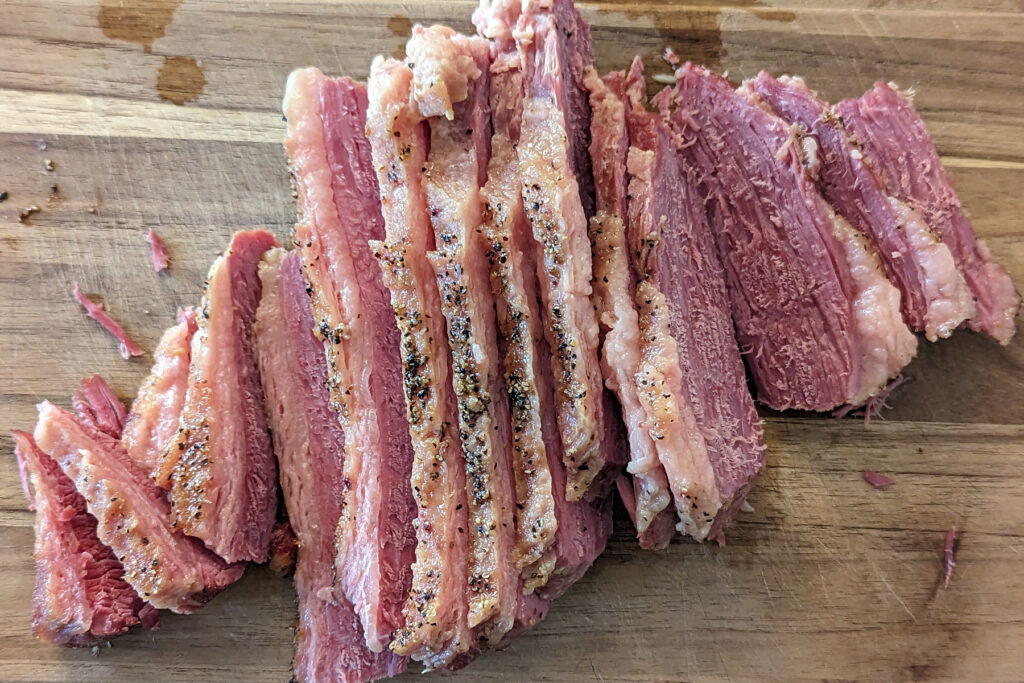
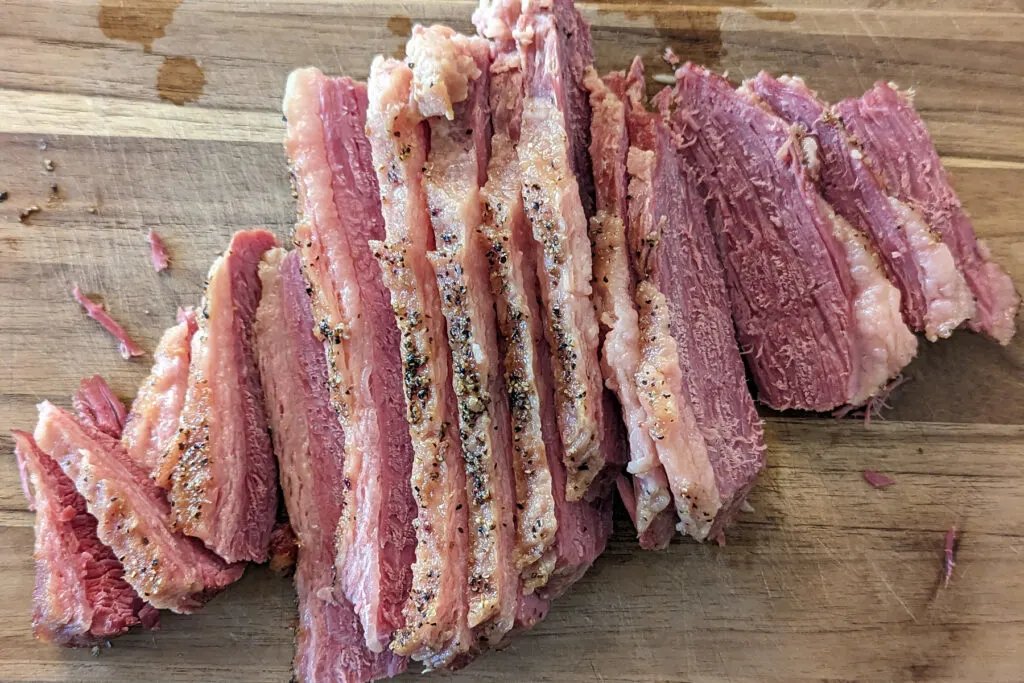
Step 6: Slice the corned beef and place them into the dish with the vegetables. Serve it with Horseradish Cream Sauce, and enjoy!
Expert Tips
- Select a well-marbled brisket, resulting in a more tender finished product.
- Rinse the corned beef under cold water to remove any excess salt from the brine.
- Corned beef brisket cooks at a low temperature for a long time in a Dutch Oven to ensure it becomes tender. To ensure that beef is cooked to perfection, it is best to use a food thermometer to check its internal temperature. For brisket, I suggest aiming for an internal temperature of 195-205°F (91-96°C).
- Add the cabbage, potatoes, and carrots to the pot during the last hour of cooking to ensure they cook through but don’t become mushy.
- Let the corned beef rest for 10 minutes before slicing it against the grain to ensure it stays tender and juicy.
Searching for More Like This?
If you love this recipe, try one of these Dutch oven favorites!
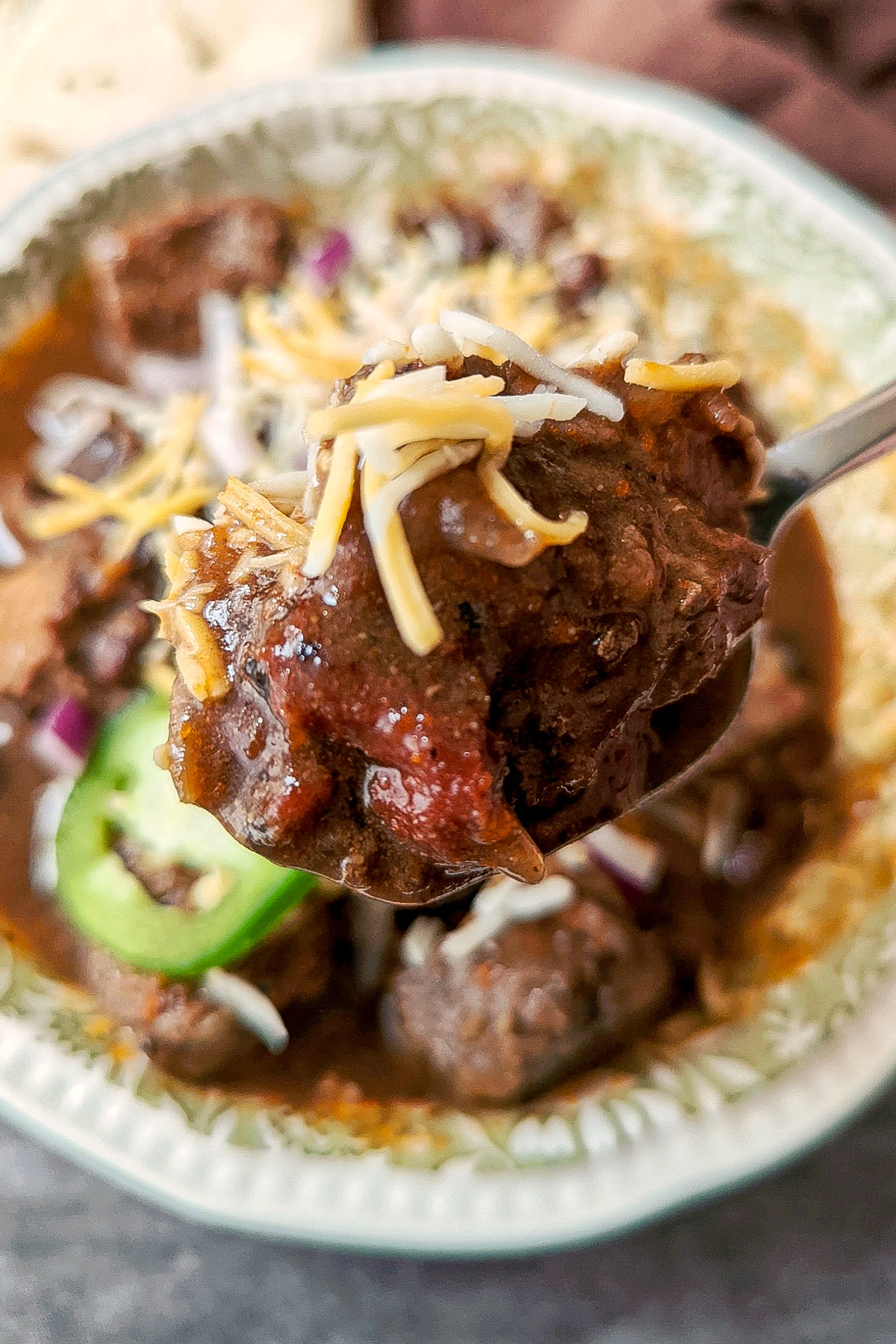
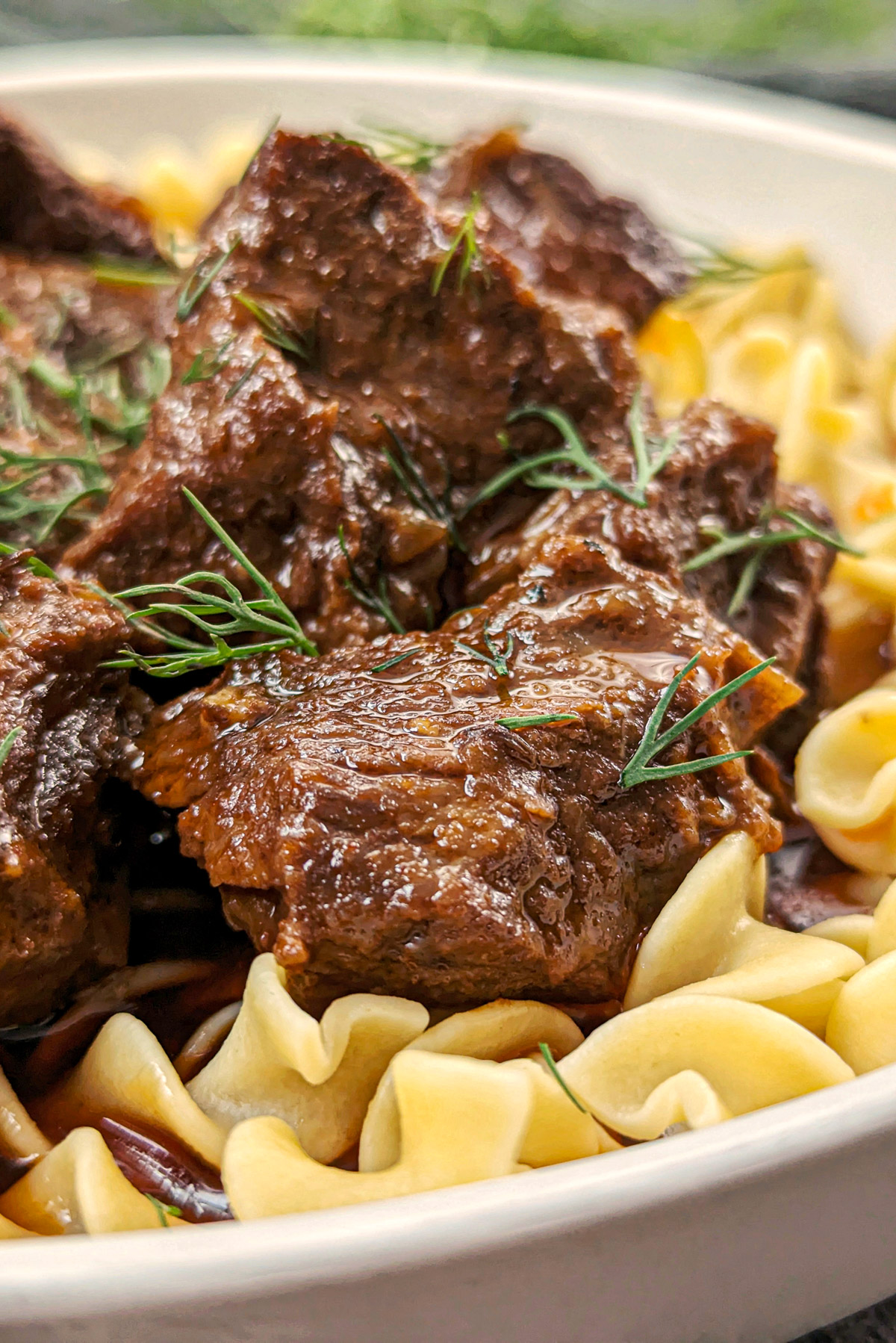
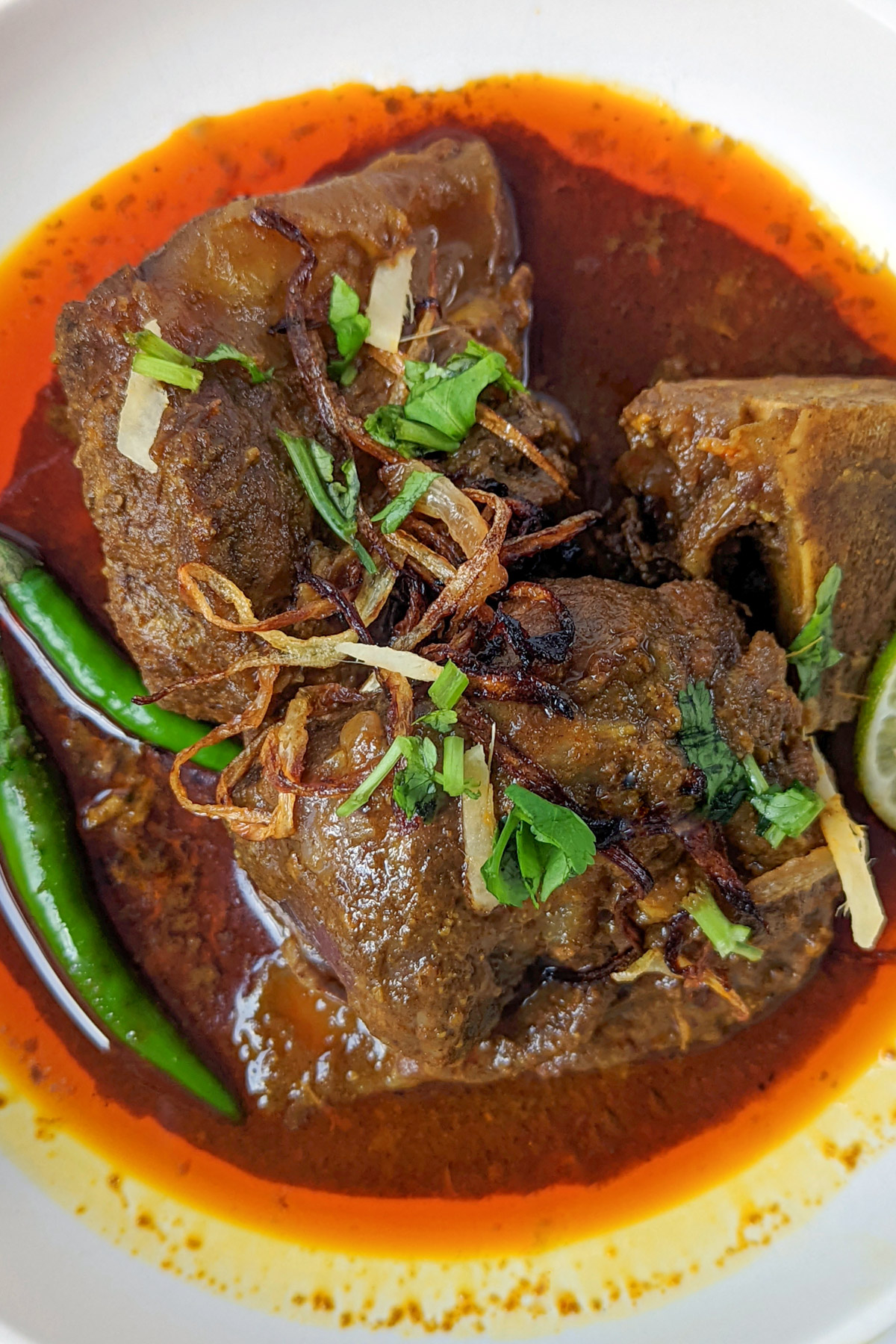
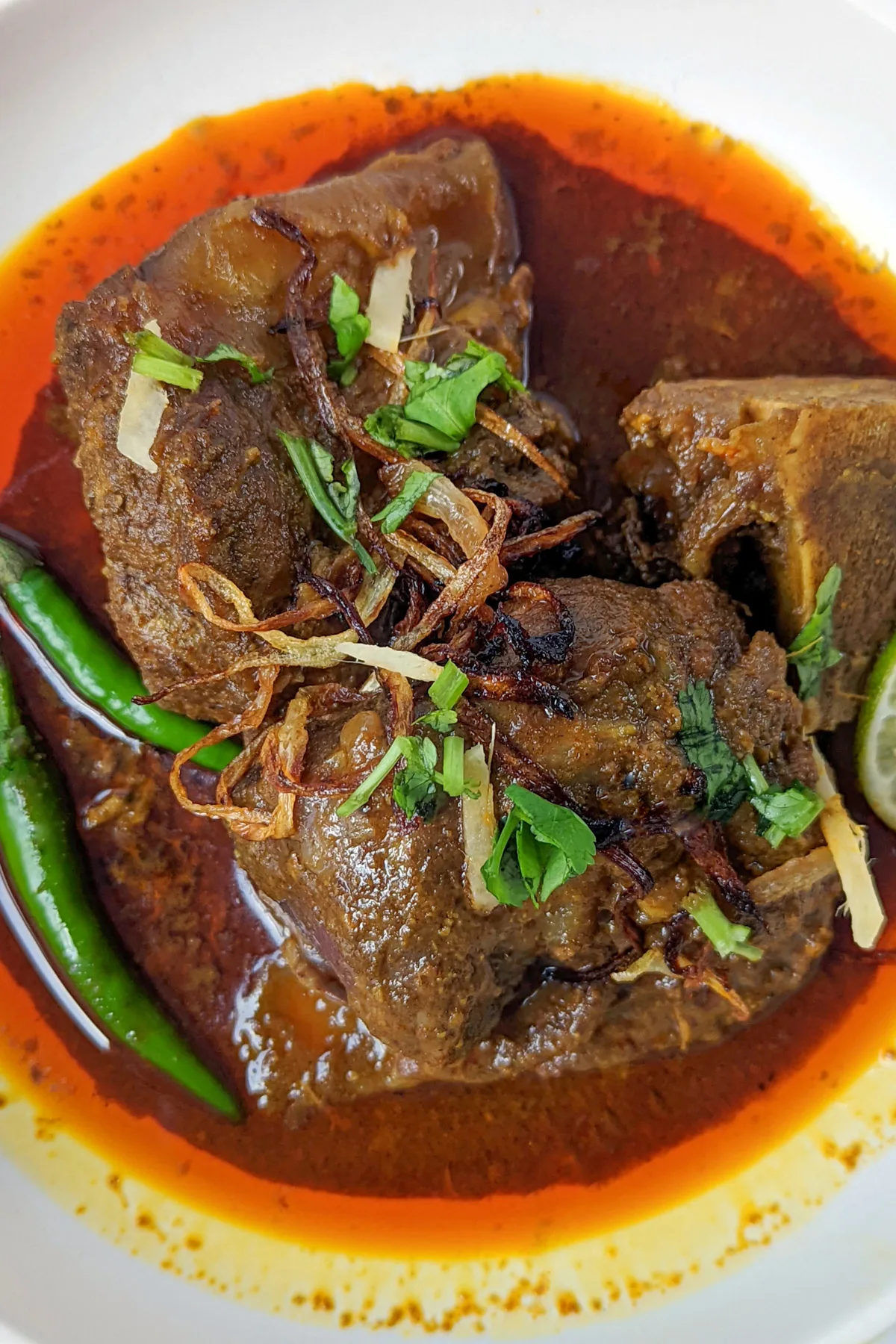


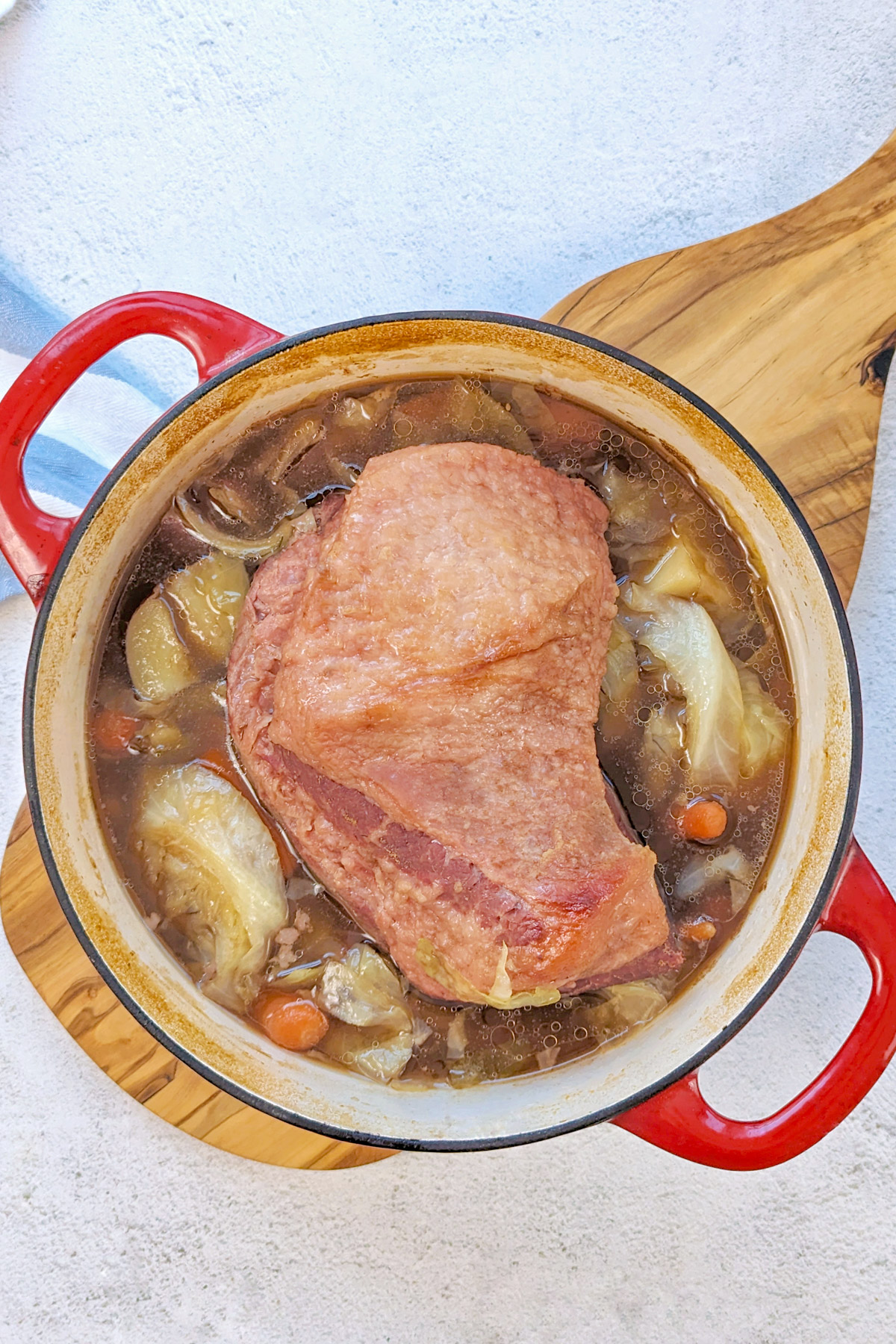
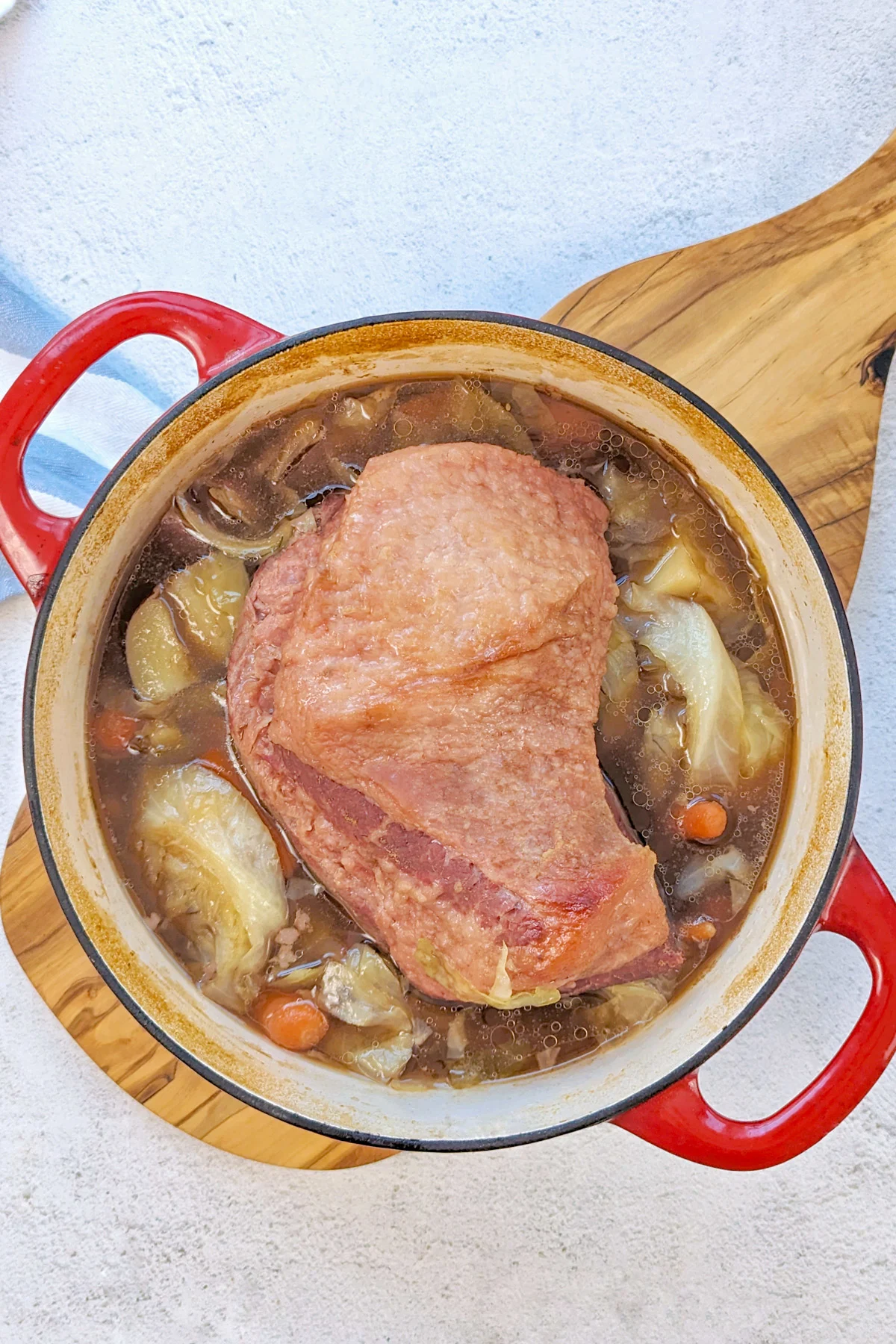
Serving Suggestions
Traditional Dutch oven corned beef and cabbage is a classic American-Irish dish typically served on St. Patrick’s Day. Here are some side dishes to pair with the dish.
- Irish Soda Bread without Buttermilk, Dutch Oven Sourdough Bread
- Spicy Mustard, Horseradish Cream Sauce
- Roasted Parsnips, Green Beans
What to do With the Leftovers
- Refrigerate – Store the leftovers in an airtight container in the fridge for 3-4 days.
- Freeze – Once the dish cools, transfer it to a freezer-safe container or bag for storage. Dutch oven corned beef and cabbage freezes for up to 2-3 months.
- Thaw – Defrost the roast in the refrigerator overnight.
- Reheat – Warm the leftovers in the microwave or stovetop!
- Repurpose – Create delicious meals from the leftovers like Reuben sandwiches, sliders, corned beef and cabbage egg rolls, salads, or corned beef hash.
Frequently Asked Questions
What’s the difference between flat cut and point cut brisket?
Flat-cut brisket has a long, flat shape with a uniform thickness. It is leaner than point-cut brisket and has a layer of fat on one side. Its firm texture makes it perfect for neat slices.
Point-cut brisket is a thicker cut of beef brisket, and it has an irregular shape, typically with one end that’s thicker than the other. It has fat marbling throughout, making it juicy and flavorful. And since the point cut is more tender, it is ideal for shredding or pulling.
Flat-cut brisket is a good choice if you prefer leaner, neater slices, whereas point-cut brisket is a better option if you want juicy shredded beef.
How can you tell if the corned beef is done?
The corned beef and vegetables should be fork-tender, and it’s possible to overcook beef brisket. Some common mistakes are cooking the meat over too high of heat or cooking it for too long.
However, the best way to tell if the beef is done cooking is to use a food thermometer to check the internal temperature. I suggest cooking the brisket to 195-205°F (91-96°C).for optimal tenderness.
How long to cook corned beef and cabbage in the Dutch oven?
The sweet spot for cooking corned beef in the Dutch oven is to aim for 2 1/2 to 3 hours of cooking time for a 3-4 pound corned beef brisket, though cooking times can vary depending on the size of the meat and the heat of your oven.
What is the best method for cooking corned beef?
You can make tender and delicious Dutch oven corned beef and cabbage in a slow cooker, Instant Pot, or grill. However, I prefer cooking corned beef brisket in a Dutch oven for soft, tender slices of corned beef.
Do you rinse corned beef before cooking?
It’s best to rinse the beef before cooking it to remove the excess salt from the brining process.
More Brisket Recipes:
Dutch Oven Corned Beef and Cabbage
- 1 tablespoon black peppercorns
- 1 tablespoon yellow mustard seed
- 2 tablespoons coriander seeds
- 6 whole black cloves
- 1 tablespoon whole allspice berries
- 6 bay leaves, broken down
- 3-4 pounds corned beef, flat-cut, and rinsed
- 4 cups beef stock
- 1 tablespoon ginger, ground
- 2 tablespoon brown sugar, packed
- 1 pound petite potatoes, halved
- 1 head green cabbage, shredded
- 5 carrots, chopped, 1-2 inch pieces
- Preheat the oven to 325°F (162°C) and fill a spice ball with the whole spices. Set it aside.
- Remove the corned beef from its packaging and discard the brine and spice packet. Rinse the meat to remove excess brine, and place it into the center of a Dutch oven fat side up.
- Add beef stock, ground ginger, and brown sugar. Stir to combine, then bring the mixture to a boil over medium heat.
- Nestle the reserved spice ball into the pan, cover, and bake for 2 hours.
- Remove the pan from the oven and arrange the potatoes, cabbage, and carrots around the brisket. Bake uncovered for another hour.
- Transfer beef to a cutting board and let it rest for 10 minutes on a cutting board before carving. Meanwhile, drain the broth and arrange the vegetables into a serving dish.
- Slice the corned beef and place them into the dish with the vegetables. Serve it with Horseradish Cream Sauce, and enjoy!
- Select a well-marbled brisket, resulting in a more tender finished product.
- Rinse the corned beef under cold water to remove any excess salt from the brine.
- Corned beef brisket cooks at a low temperature for a long time in a Dutch Oven to ensure it becomes tender. To ensure that beef is cooked to perfection, it is best to use a food thermometer to check its internal temperature. For brisket, I suggest aiming for an internal temperature of 195-205°F (91-96°C).
- Add the cabbage, potatoes, and carrots to the pot during the last hour of cooking to ensure they cook through but don’t become mushy.
- Let the corned beef rest for 10 minutes before slicing it against the grain to ensure it stays tender and juicy.
- The nutritional information shown is an estimate provided by an online nutrition calculator. It should not be considered a substitute for professional advice.