
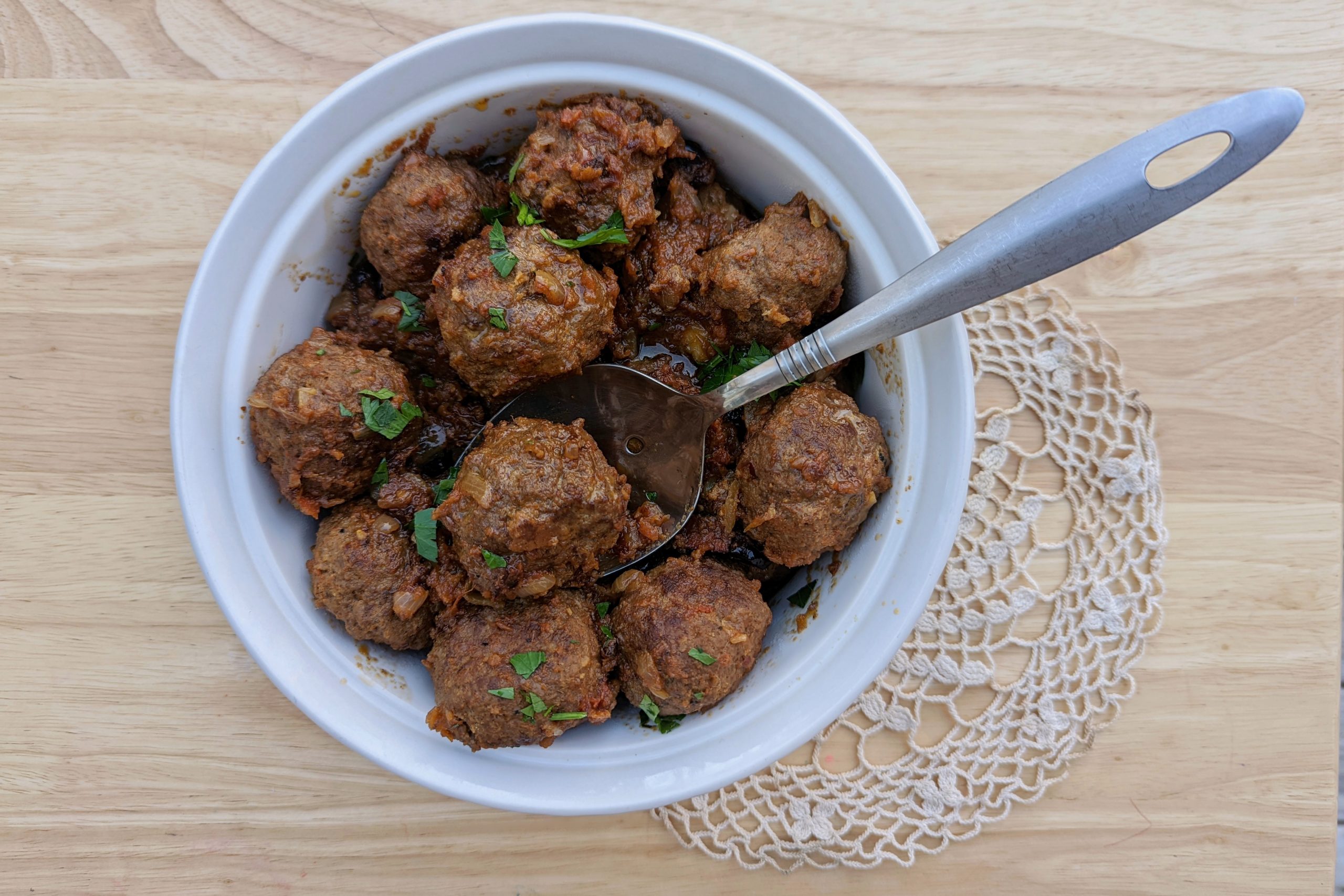
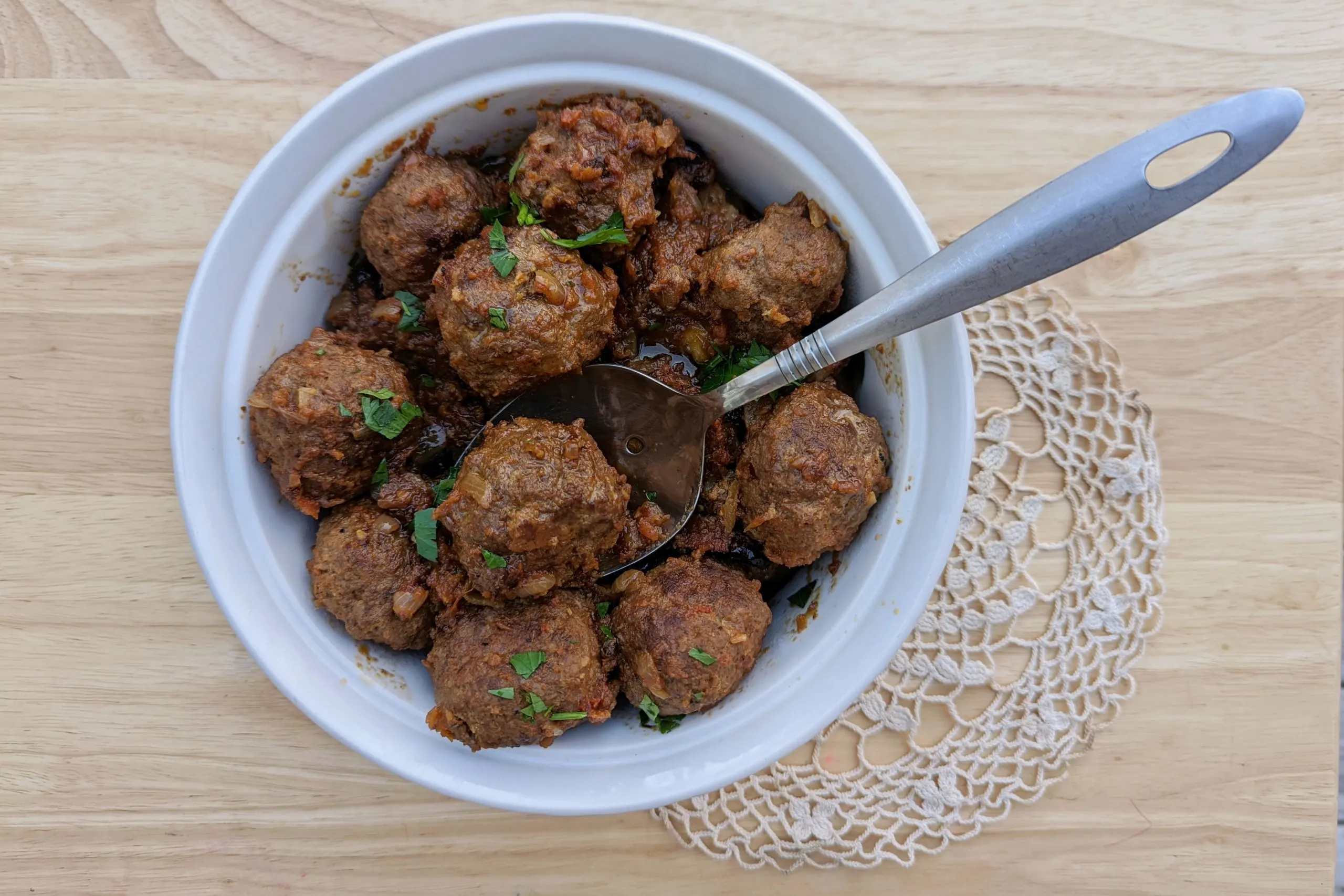
Moroccan meatballs or Moroccan kefta tagine are warmly spiced beef or lamb meatballs simmered in a tomato-based sauce flavored with onions, fresh garlic, ginger, and sweet dates.


What is Kefta Tagine?
The term ‘tagine’ refers to a cooking vessel with a cone-like lid used in many cultures (particularly North Africa) to stew and braise ingredients ‘kefta,’ which translates to meatball in English.
What You Need to Make this Recipe
For the Meatballs:
- Beef: Use ground beef or lamb for this dish.
- Spices: Season the Moroccan meatballs with ground green cardamon, coriander, cumin, paprika, cinnamon, salt, and pepper.
- Egg: Bind the meatballs together with an egg.
- Oil: Used for frying, plus more oil to coat your hands while forming the meatballs.
For the Tagine:
- Onion: I use yellow or vidalia onion because they add sweetness to the tagine.
- Garlic: I suggest using three garlic cloves, but measure with your heat.
- Ginger: The Moroccan tagine isn’t the same without fresh ginger.
- Tomato: Fresh tomatoes create the base for rich and flavorful tagine. I use Roma tomatoes because they have less moisture than other varieties, and I puree them beforehand using a blender or food processor to speed up the cooking process. Another option is to dice the tomatoes and sweat them down over low heat – resulting in a thicker tagine and a longer cooking time.
- Dates: Dates are my favorite addition to this meal, but you can also use raisins or dried cranberries.
- Chicken Broth: Simmer the meatballs in the tagine and chicken broth for juicy Moroccan meatballs every time.
How to Make Moroccan Meatballs
The full recipe with measurements is in the recipe card below.
Step 1: Combine ground beef, cardamom, ground coriander, ground cumin, paprika, salt, pepper, and egg in a mixing bowl; knead for 3 minutes.
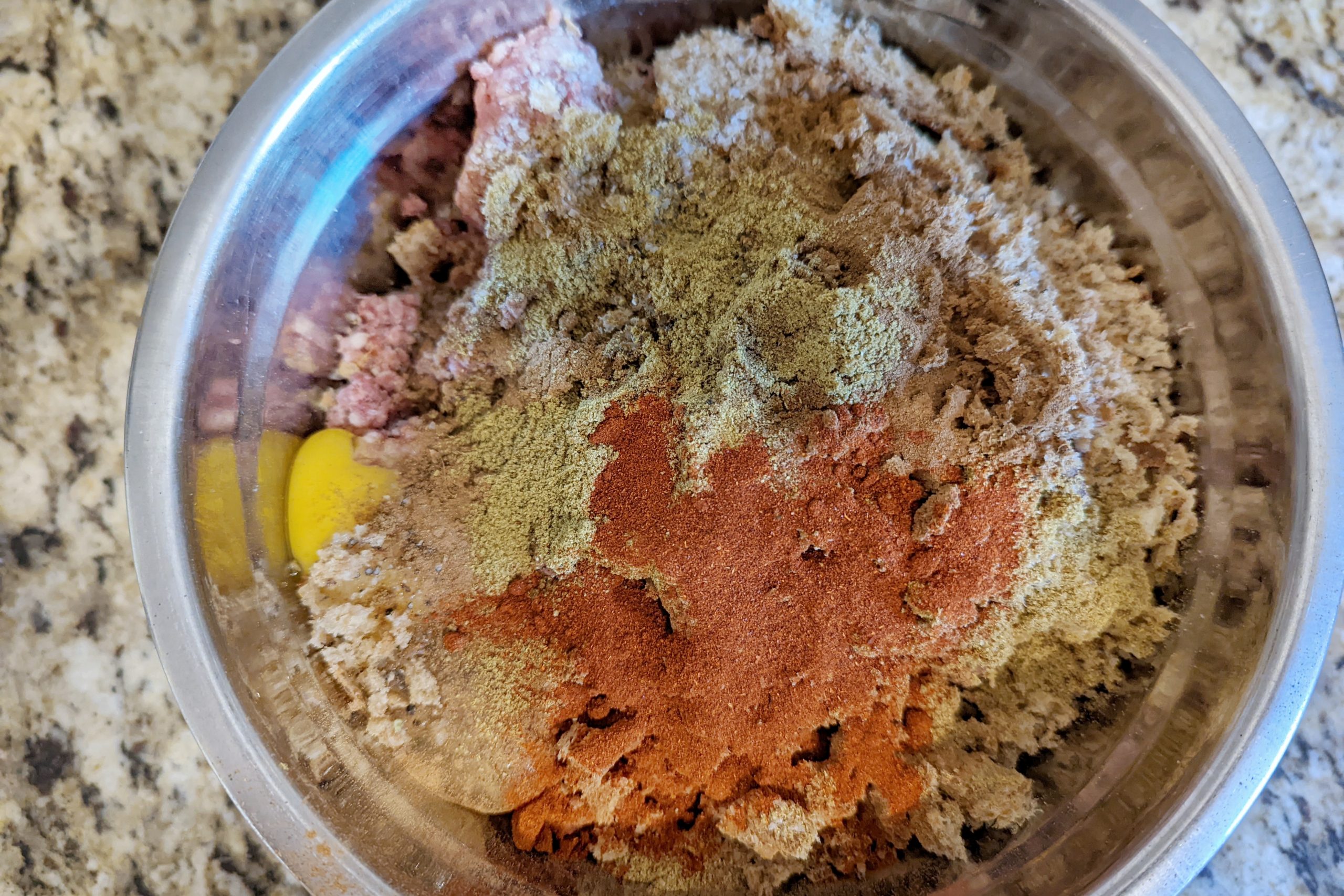
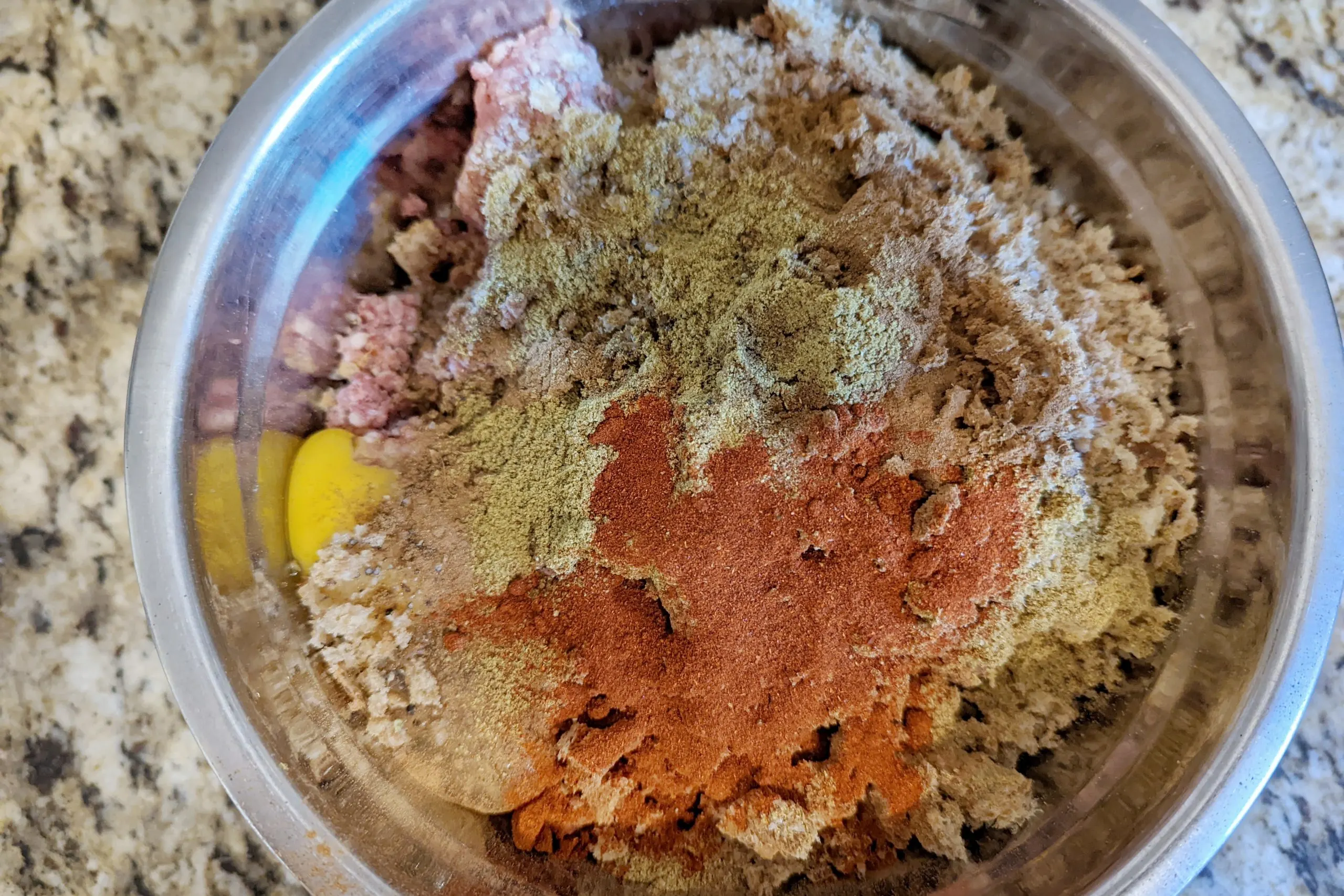
Step 2: Roll the mixture into 1- 1½ inch meatballs and set them aside.
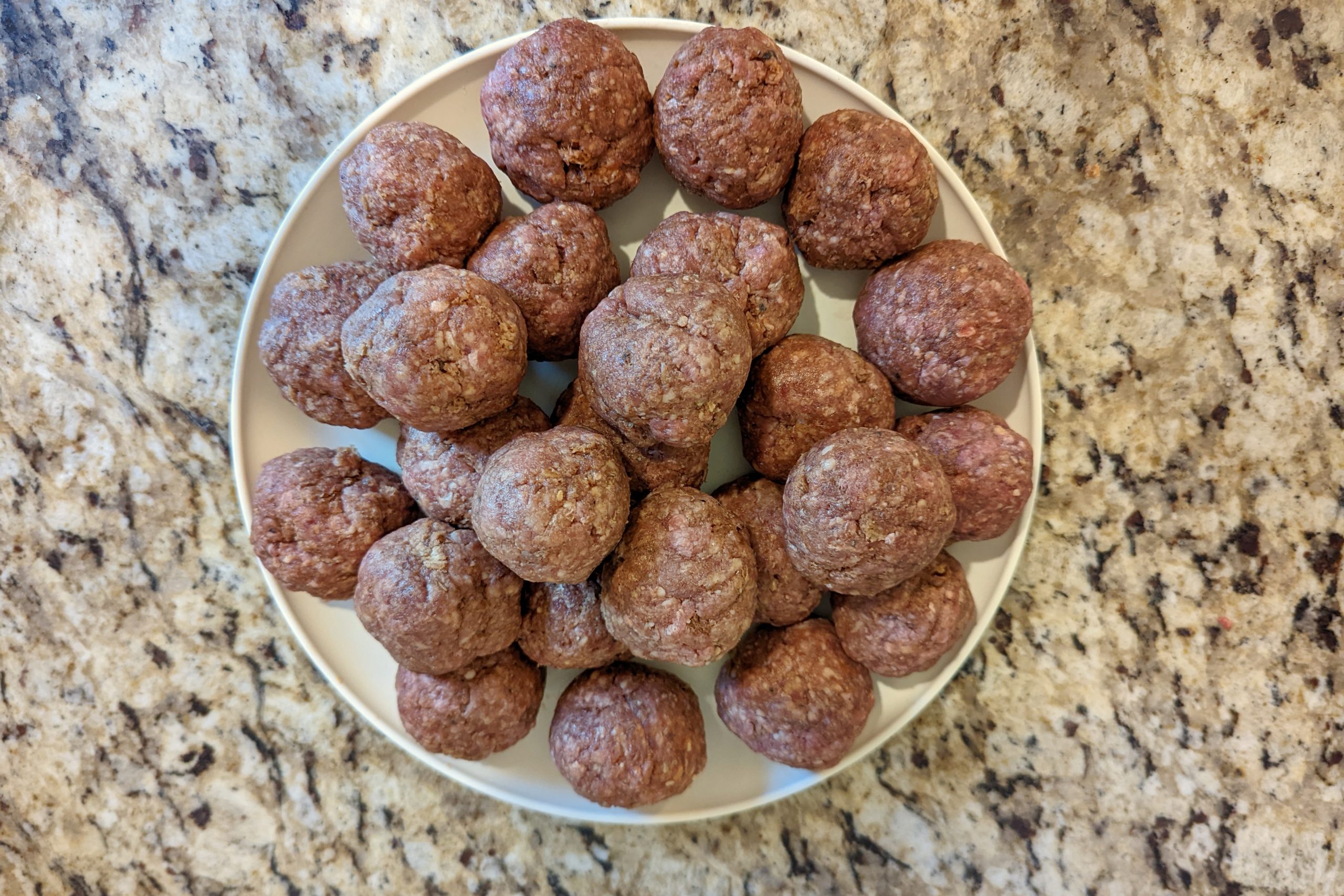
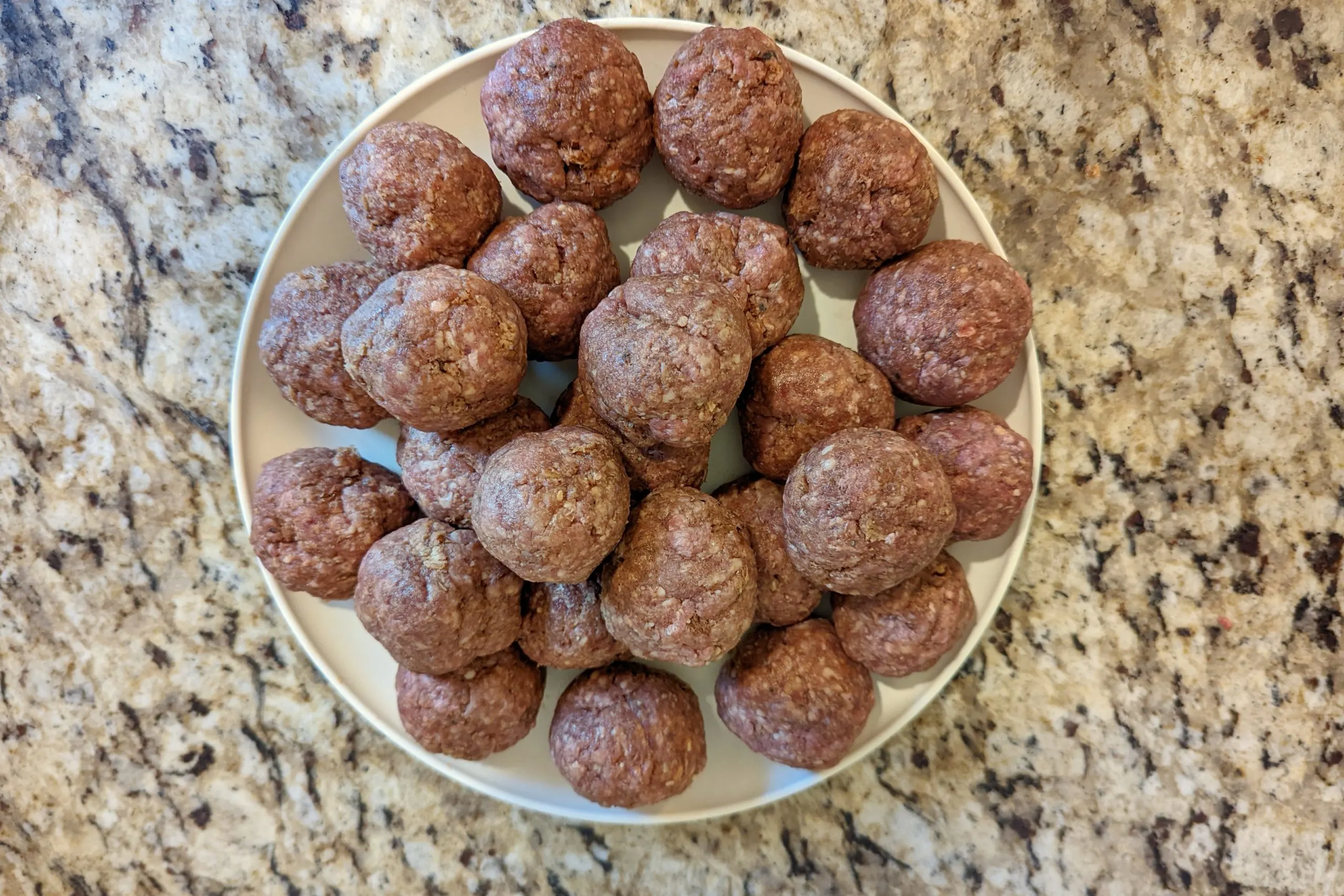
Step 3: Warm a skillet over medium heat and add oil. Then, add the first layer of meatballs.
Cook for 3-5 minutes, rotating them often to get a nice sear on all sides. Set the partially cooked meatballs aside and repeat with the remaining ingredients.


Step 4: In the same pan, saute the onions until they become translucent and soften, for about 10 minutes.
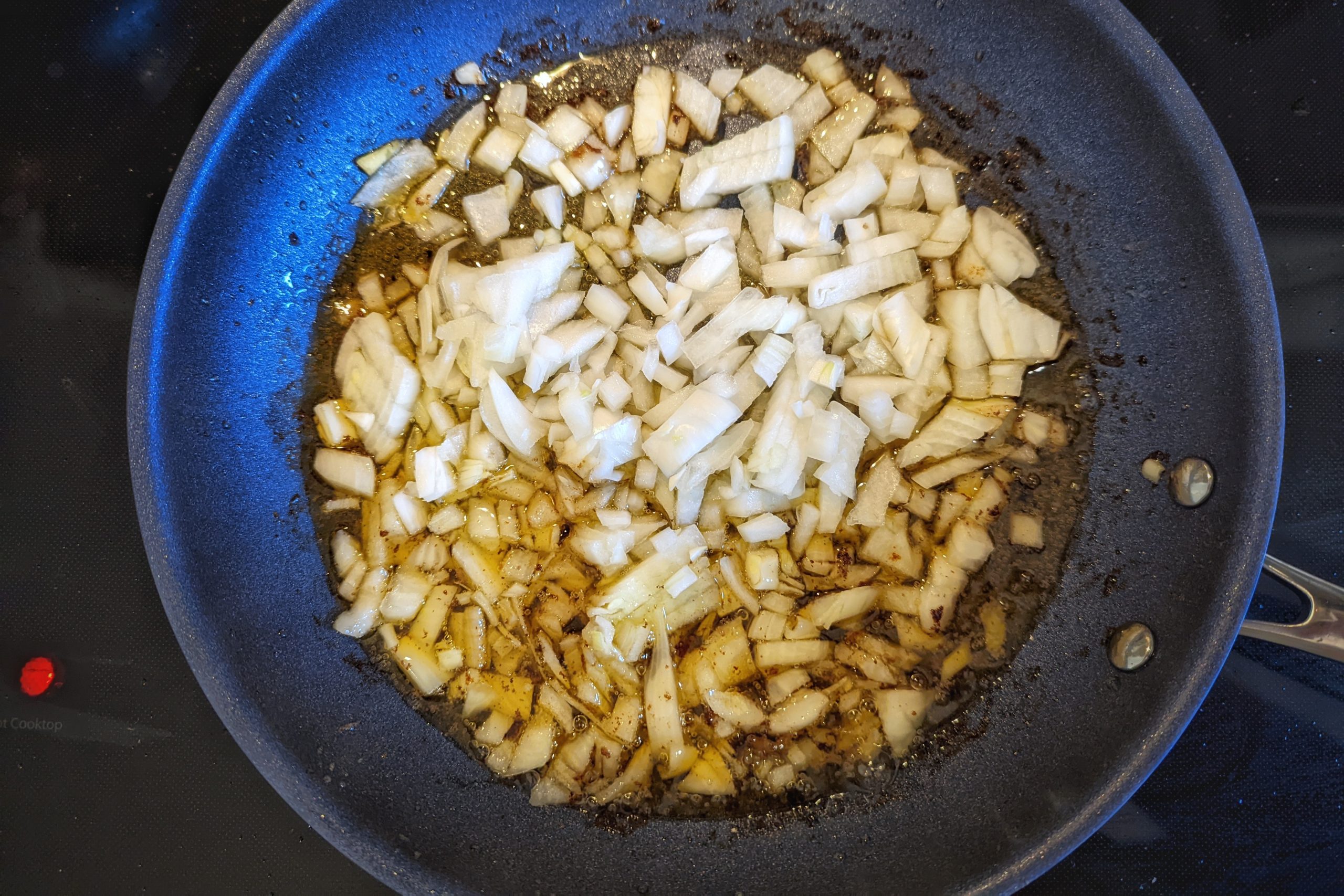
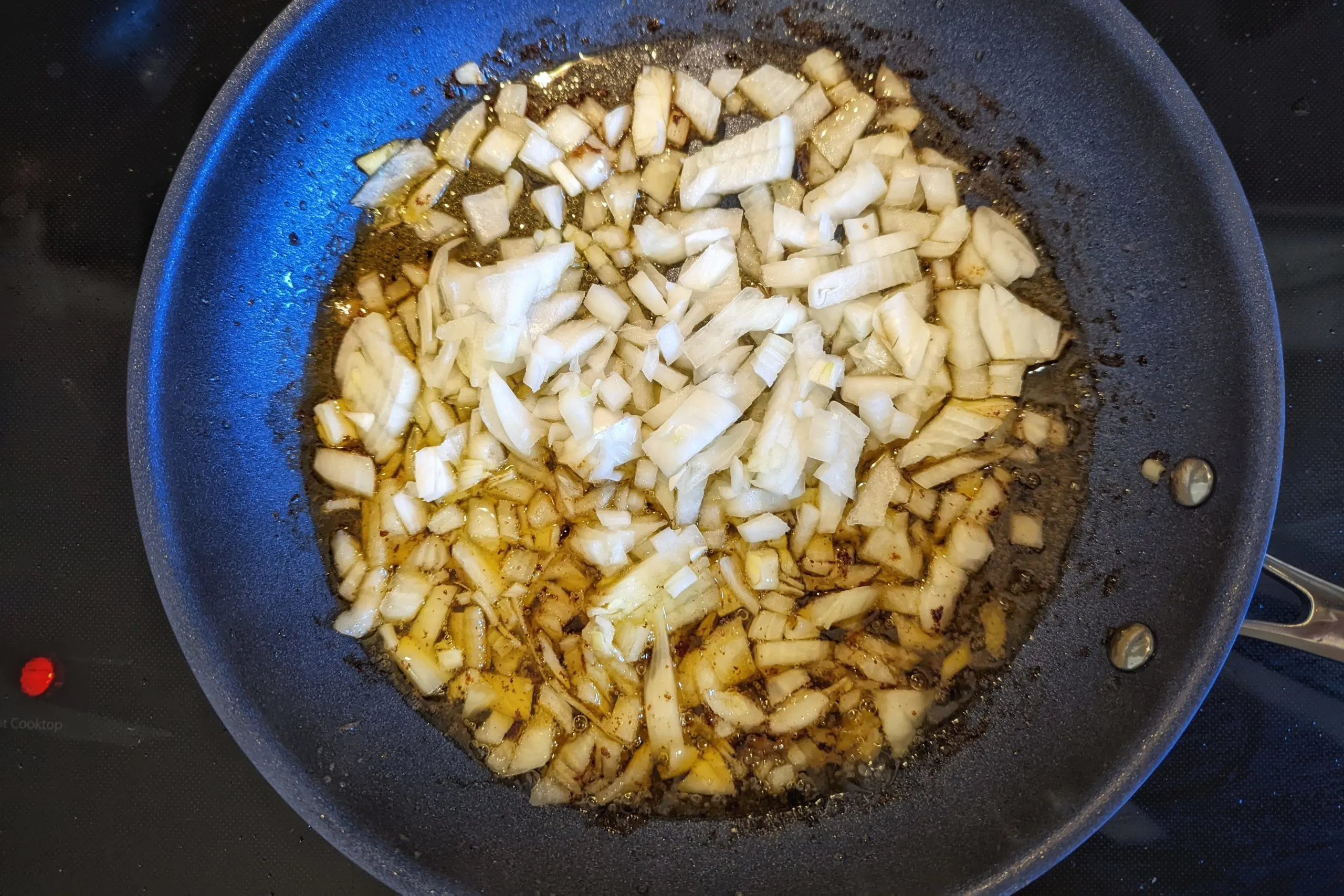
Step 5: Stir in the garlic and ginger, followed by the pureed tomatoes and dates. Simmer for 5 minutes.
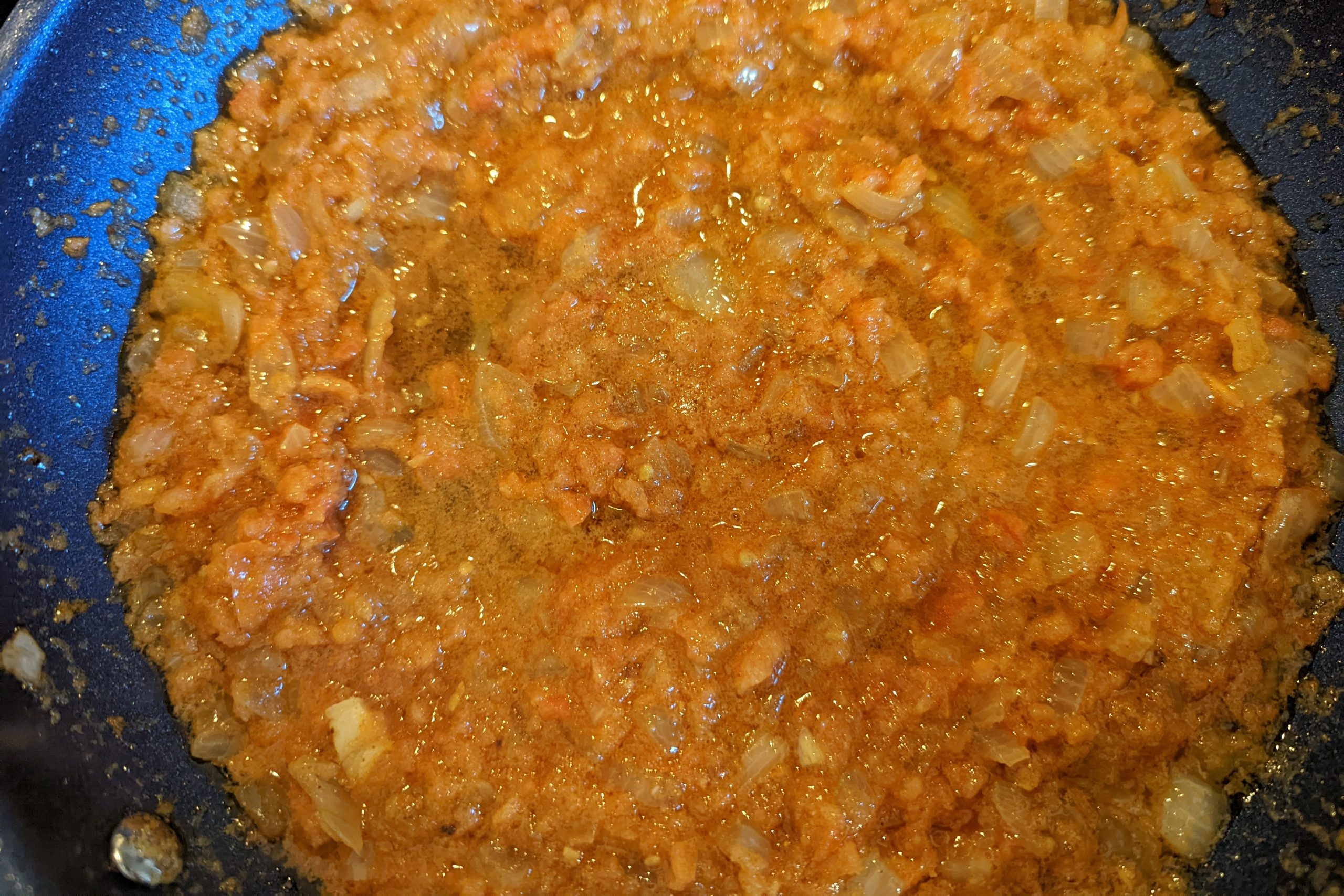
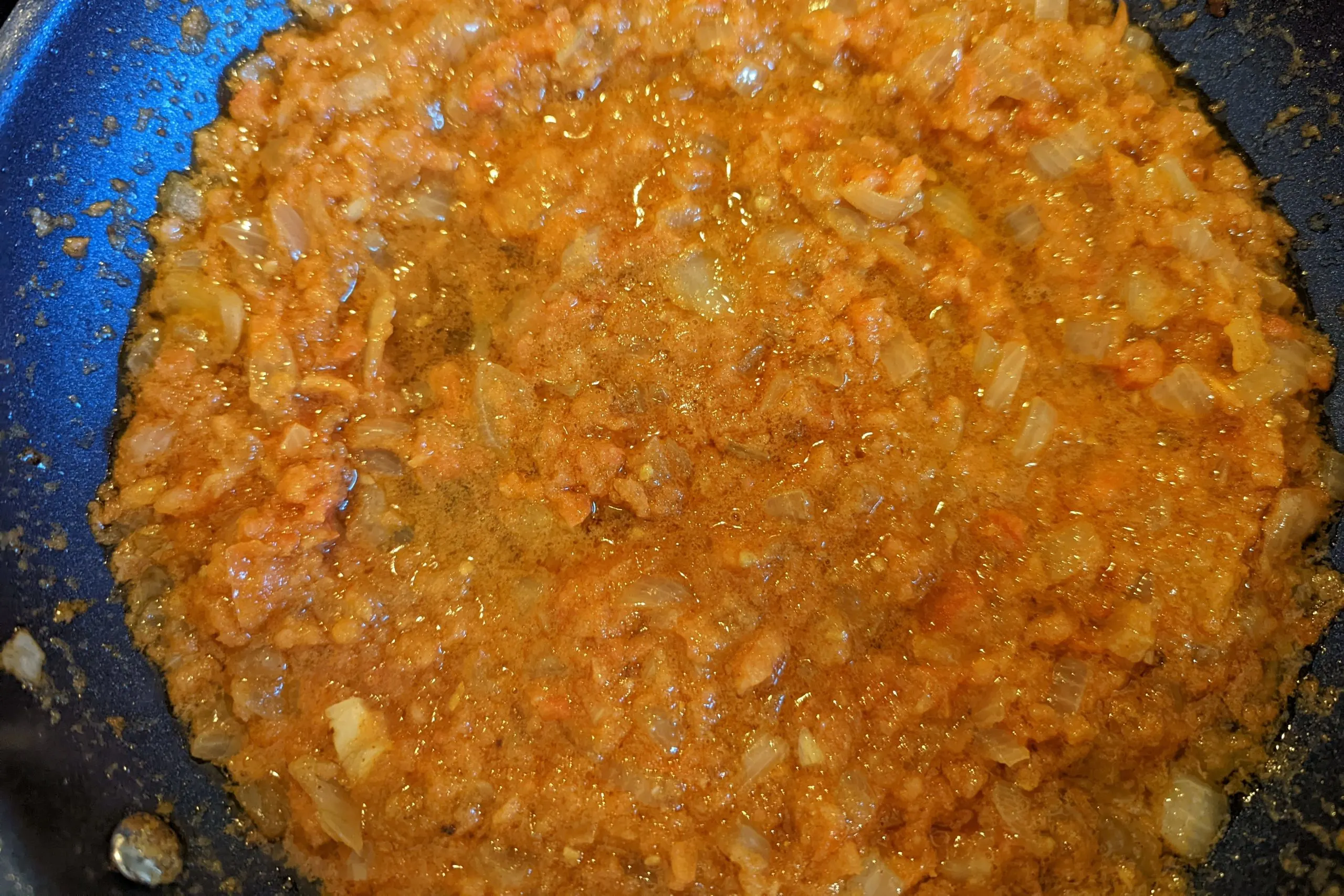
Step 6: Return the meatballs to the pan along with the chicken broth.


Step 7: Simmer over medium-low heat for 8-10 minutes. Garnish with fresh parsley or mint and serve immediately.


Expert Tips
- Refrigerate the rolled meatballs for 30 minutes before cooking them to ensure they remain intact.
SEARCHING FOR MORE LIKE THIS?
If you love this recipe, try one of these African meals!




Serving Suggestions
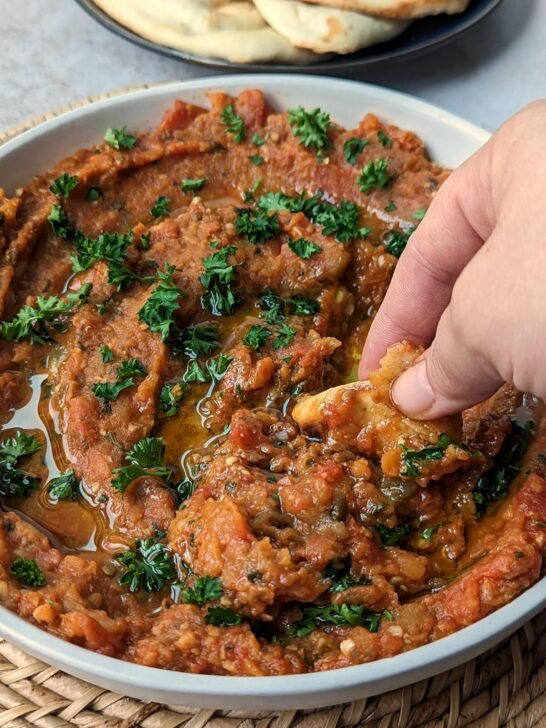
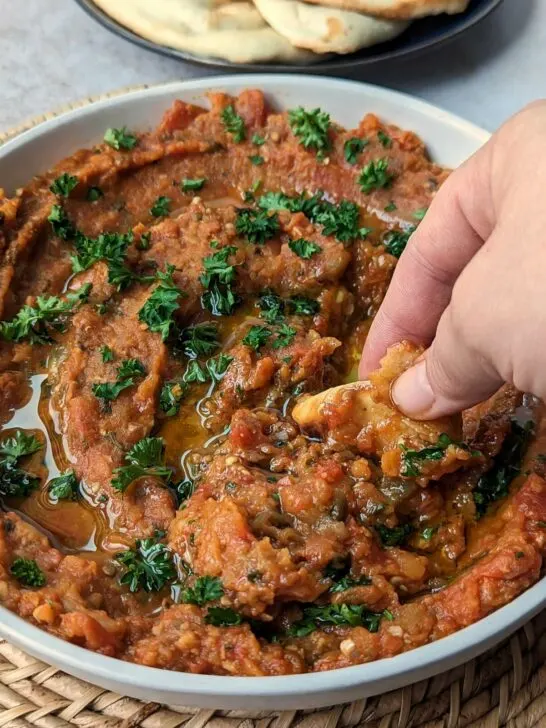
- Salad: Chickpea Salad, Tabbouleh, Moroccan Carrot Salad, Zaalouk
- Vegetables: Cherry Tomatoes, Marinated Olives
- Grains: Moroccan Couscous, Quinoa, Bulgar
- Sauce: Tzatziki Sauce, Yogurt with Olive Oil
- Rice: Basmati Rice, Saffron Rice
- Bread: Pita
- Sides: Loubia
Frequently Asked Questions
Are the meatballs spicy?
They are not spicy, but they are bursting with flavor! The North African spice blend we use combines warm spices like crushed green cardamom, ground coriander, ground cumin, smoked paprika, and ground cinnamon to season the meatballs and the sauce.
How do you make Moroccan lamb meatballs?
Follow the recipe as is, but use ground lamb instead of beef, or a combination of the two – everything else stays the same!
Can I bake the meatballs instead?
Preheat the oven to 350°F (176°C), then line a rimmed baking sheet with parchment paper. Arrange the meatballs onto the baking sheet and cook them for 25-30 minutes.
Do I need a tagine to make the meatballs?
A tagine is a heavy-bottomed Moroccan clay or ceramic cookware used to simmer foods. You can also use a Dutch oven, stockpot, or large saute pan.
More Meatball Recipes:


Moroccan Meatballs
- Skillet , 12- Inch
- 1 pound ground beef
- 1 tablespoon green cardamom, green shell removed, and ground
- 1 tablespoon ground coriander
- 1 ½ teaspoon ground cumin
- 1½ teaspoon smoked paprika
- 1 teaspoon ground cinnamon
- 1 teaspoon kosher salt
- ½ teaspoon black pepper, coarse ground
- 1 egg
- ¼ cup olive oil
- 1 yellow onion, diced
- 3 cloves garlic, minced
- ½ inch fresh ginger, minced
- 3-4 medium tomatoes, pureed
- 4 dates, pit removed, and diced
- ½ cup chicken broth
- fresh parsley, chopped, to garnish
- fresh mint, chopped, to garnish
- Combine ground beef, cardamom, ground coriander, ground cumin, paprika, salt, pepper, and egg in a mixing bowl; knead for 3 minutes.
- Roll the mixture into 1- 1½ inch meatballs and set them aside.
- Warm a skillet over medium heat and add oil. Then, add the first layer of meatballs. Cook for 3-5 minutes, rotating them often to get a nice sear on all sides. Set the partially cooked meatballs aside and repeat with the remaining ingredients.
- In the same pan, saute the onions until they become translucent and soften, for about 10 minutes.
- Stir in the garlic and ginger, followed by the pureed tomatoes and dates. Simmer for 5 minutes.
- Return the meatballs to the pan along with the chicken broth.
- Simmer over medium-low heat for 8-10 minutes. Garnish with fresh parsley or mint and serve immediately.
- The nutritional information shown is an estimate provided by an online nutrition calculator. It should not be considered a substitute for professional advice.
Kathi
Thursday 9th of June 2022
Can not wait to make this recipe. 12 tomatoes adapted it for the slow cooker, so I will take your recipe and make it in the slow cooker. Love that you pureed the Roma tomatoes -it will make the gravy so much smoother. I will be doing the same. But, I will grate the onion into the ground beef as my family are not fans of onion chunks. Thank you so much for posting this recipe. It's so much better than the one 12 tomatoes posted.
Tressa Jamil
Thursday 9th of June 2022
Hey Kathy, I cannot wait to hear back from you once you’ve made it! I do have a suggestion for you regarding the onions. I often do this when preparing Indian curries, but you can actually cook down the onions and tomatoes as is and then use an immersion blender or food processor to smooth it out just before you return the meatballs to the mixture; that way you don’t have to take the extra step of grating the onion. It’s completely up to you though. Again, I can’t wait to hear what you and your family think of the meal.