
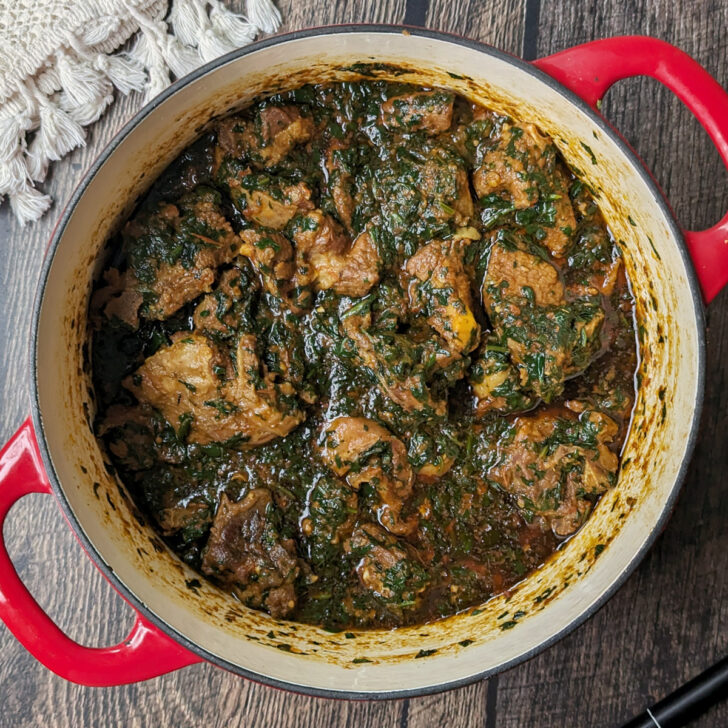
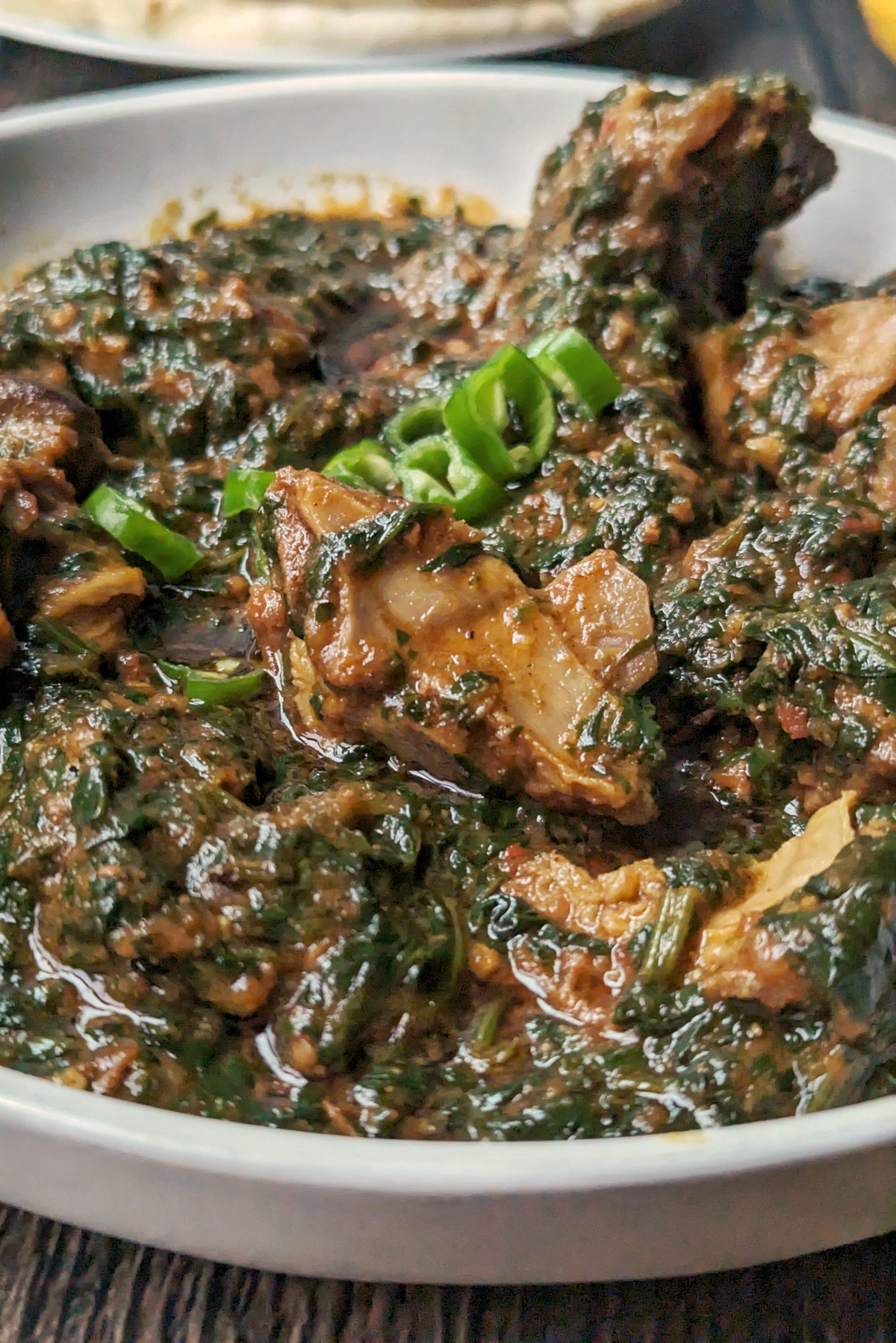
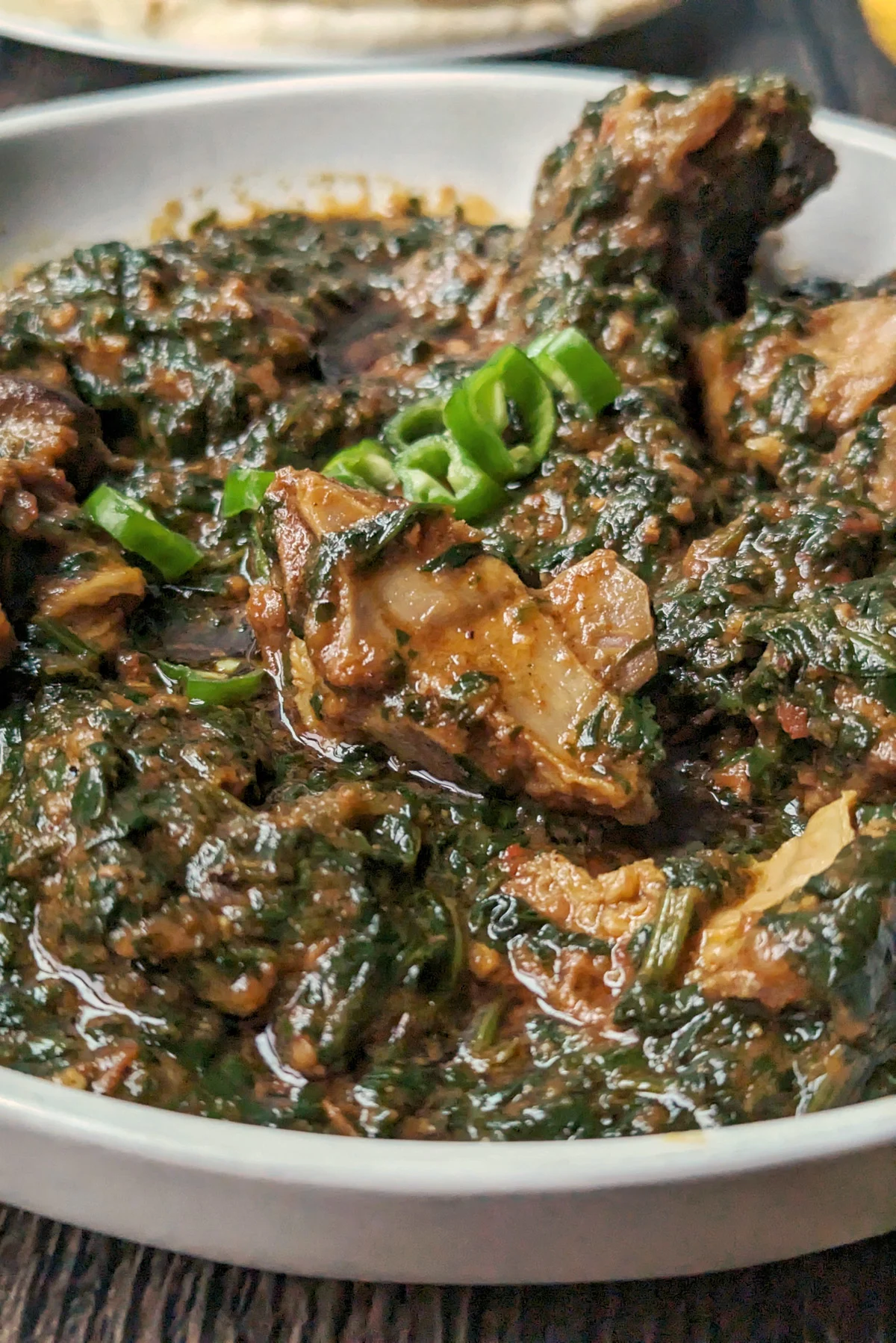
Prepare authentic Pakistani palak gosht for a hearty dinner you can serve with freshly made chapati or boiled rice. The one-pot mutton spinach curry combines tender goat slow-cooked in a spicy spinach masala for a tasty Pakistani comfort meal.
What is Palak Gosht?
Palak gosht is a hearty Pakistani stew that combines the earthy flavor of spinach, tender goat or lamb, and aromatic spices into a richly flavored dish best enjoyed with warm bread or piping hot rice.
Ingredients You’ll Need
- Ghee: Saute the onions, garlic, and ginger in ghee to develop a deep, nutty flavor for the dish.
- Onion: Thinly slice the onions to make it easy for them to caramelize.
- Garlic: I suggest using four cloves, but measure with your heart.
- Ginger Paste: Infuse the dish with even more flavor using ginger paste. You can also use one teaspoon of grated ginger if you prefer.
- Tomatoes: Fresh tomatoes create the base for the flavorful shorba (curry). Roma tomatoes work best because they have less moisture than other varieties. You can also use a food processor to puree the tomatoes to shorten the cooking time and create a smoother curry.
- Spices: Enhance the flavor of palak gosht with salt, Kashmiri chili powder, red chili flakes, coriander powder, turmeric, homemade garam masala, and fenugreek leaves.
- Mutton: Gosht means meat in Urdu and Hindi, and often refers to goat or lamb. Traditional Pakistani palak gosht features bone-in goat, but you can also use lamb, beef, and chicken.
- Green Chilies: Simmer the green chilies with the goat for heat that doesn’t overwhelm.
- Spinach: Make the signature spiced spinach curry with loads of fresh spinach, lending to the name palak (spinach) gosht.
Additions and Substitutions
- Yogurt: I leave it out to keep our recipe dairy-free, but many recipes call for yogurt to enhance the color and creaminess of the dish. If you decide to include yogurt, it’s best to add it towards the end of the cooking time; adding it too early can cause the yogurt to separate and curdle. I recommend stirring the yogurt into the dish along with the spinach.
- Spinach: Alter the spinach curry to suit your taste. One way to do this has to do with preparation. While our recipe calls for adding chopped fresh spinach at the end, some home cooks prefer to blanch the spinach beforehand and puree it in a food processor before adding it to the gosht; this increases the shorba and creates a smoother curry to sop up with warm chapati. Another way to modify the spinach curry is to replace some of the spinach in this recipe with fresh cilantro, fresh fenugreek leaves, or a combination of the two.
How to Make Palak Gosht
The full recipe with measurements is in the recipe card below.
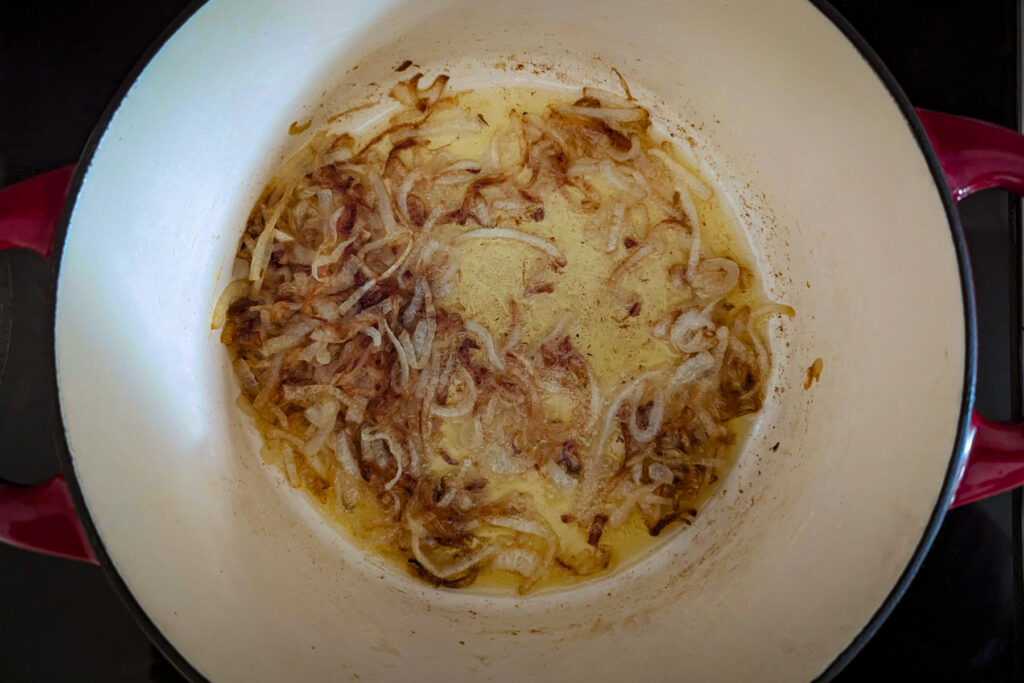
Step 1: Warm the ghee in a Dutch oven over medium heat. Add the onions and cook until they turn golden brown, for about 20-25 minutes.
Step 2: Stir in the fresh garlic and ginger paste and saute for one minute.
Then, add the tomatoes, salt, Kashmiri chili powder, lal mirch powder, coriander powder, and turmeric. Increase to medium-high heat and cook for 5 minutes.
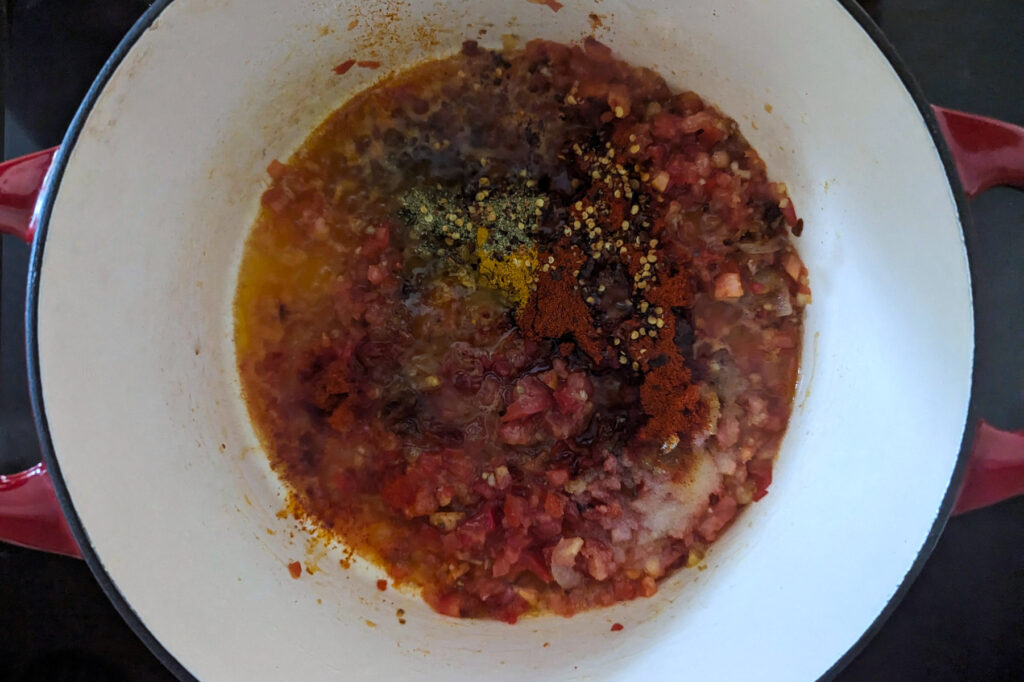
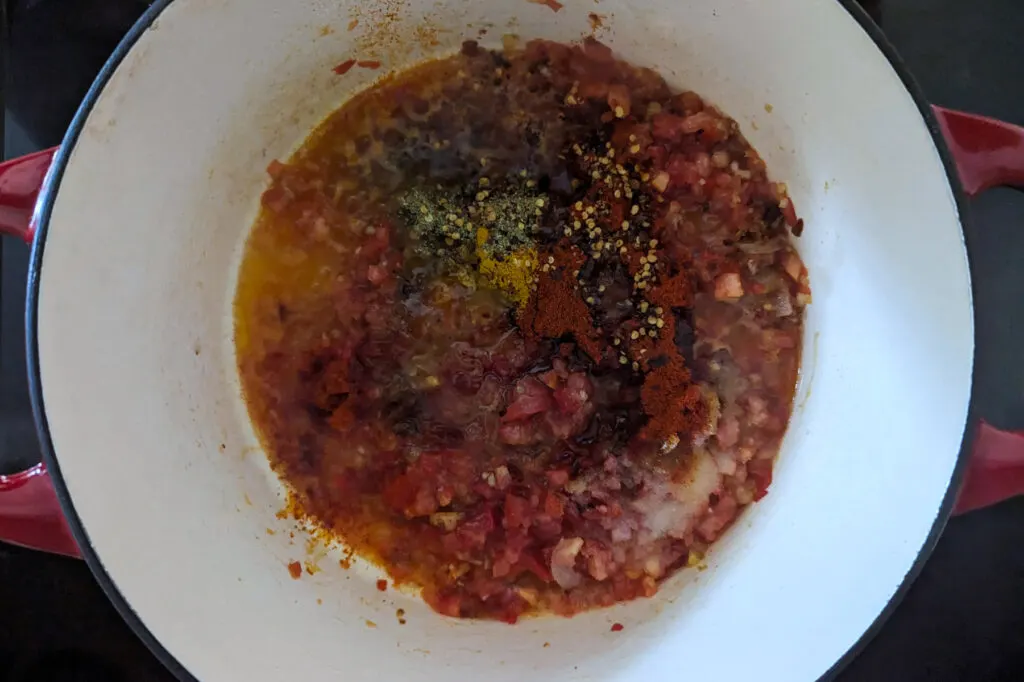
Step 3: Nestle the goat and green chilies into the pot and cover with water. Cook until the water dries and the goat is tender for 1- 1½ hours. You will see the ghee escaping to the sides; this is your sign to add the spinach.
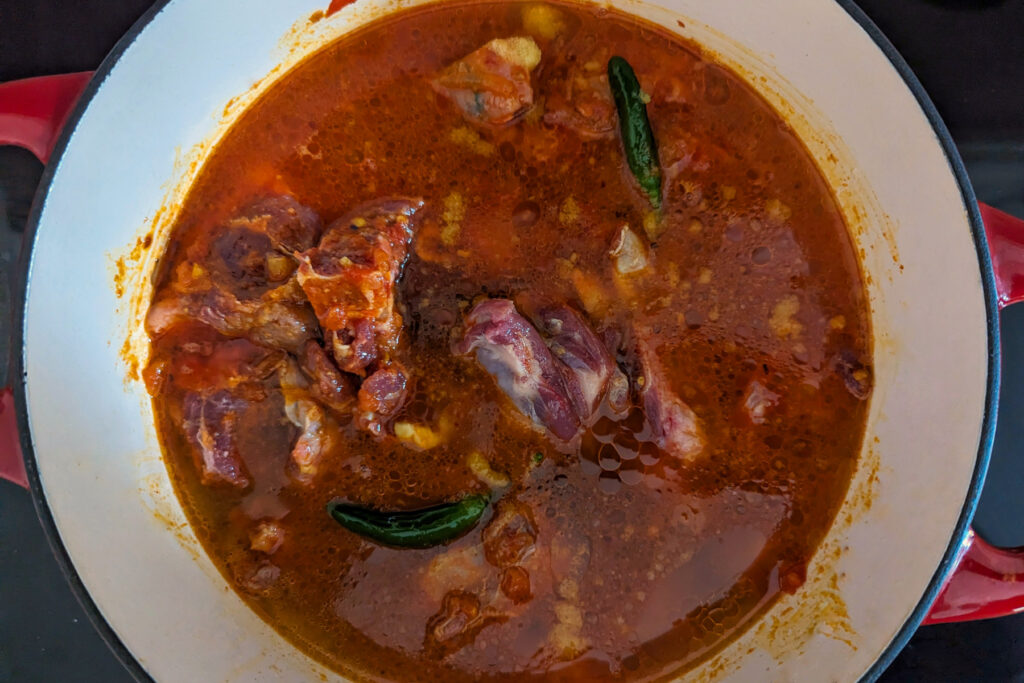
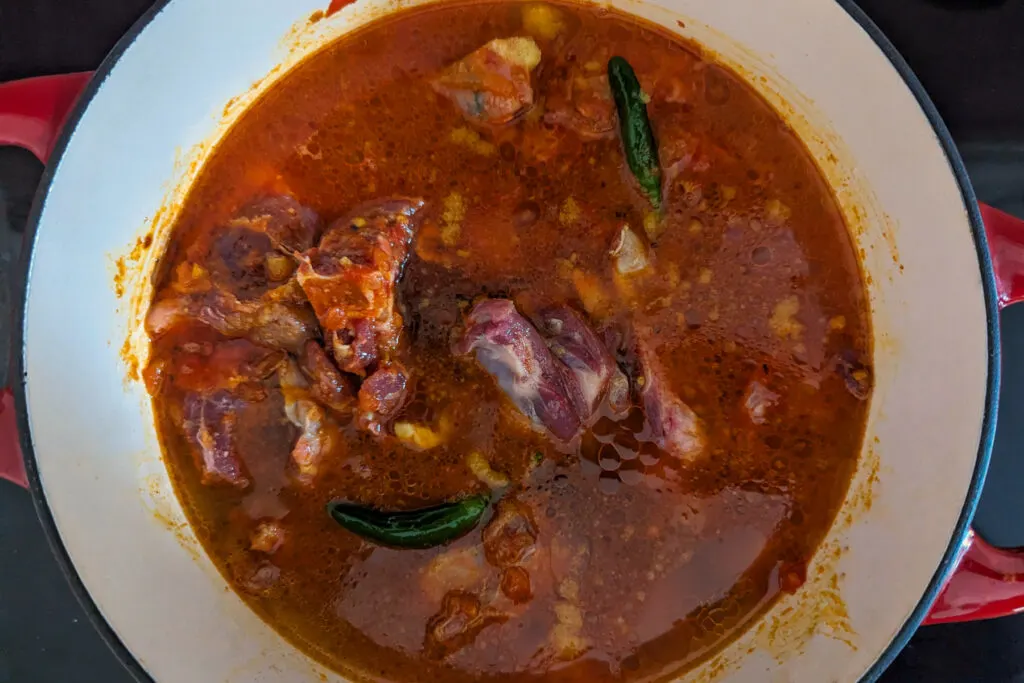
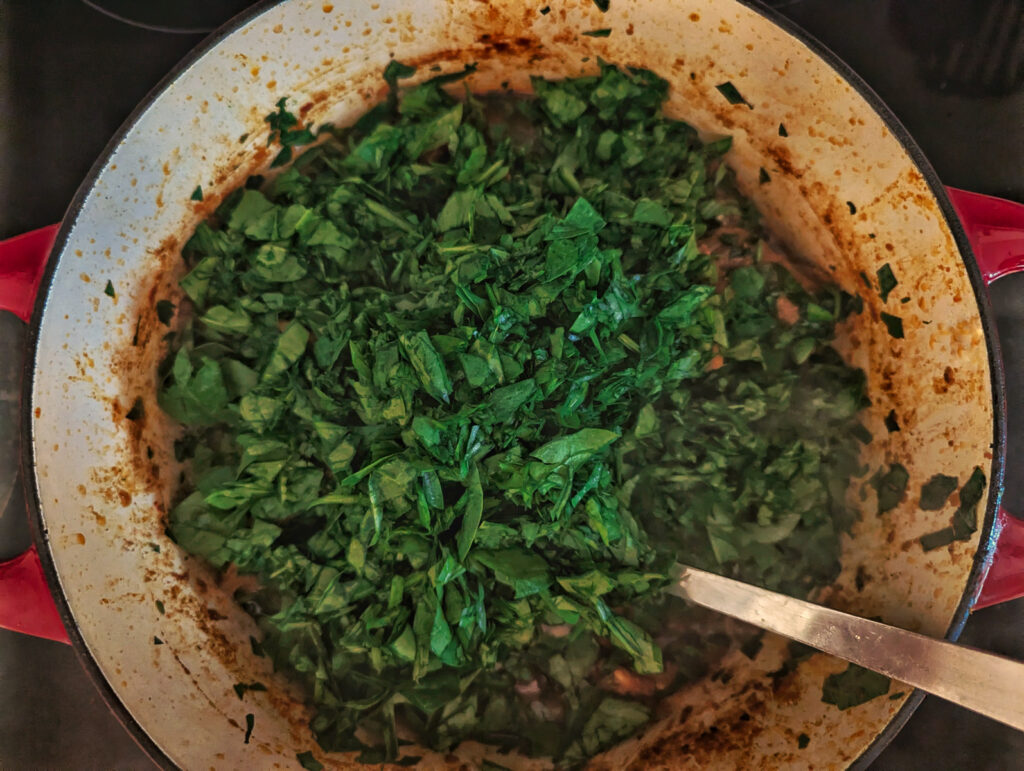
Step 4: Add the spinach and cook (bhunify) until any water released from the spinach dries, for about 10 minutes, until the ghee separates again.
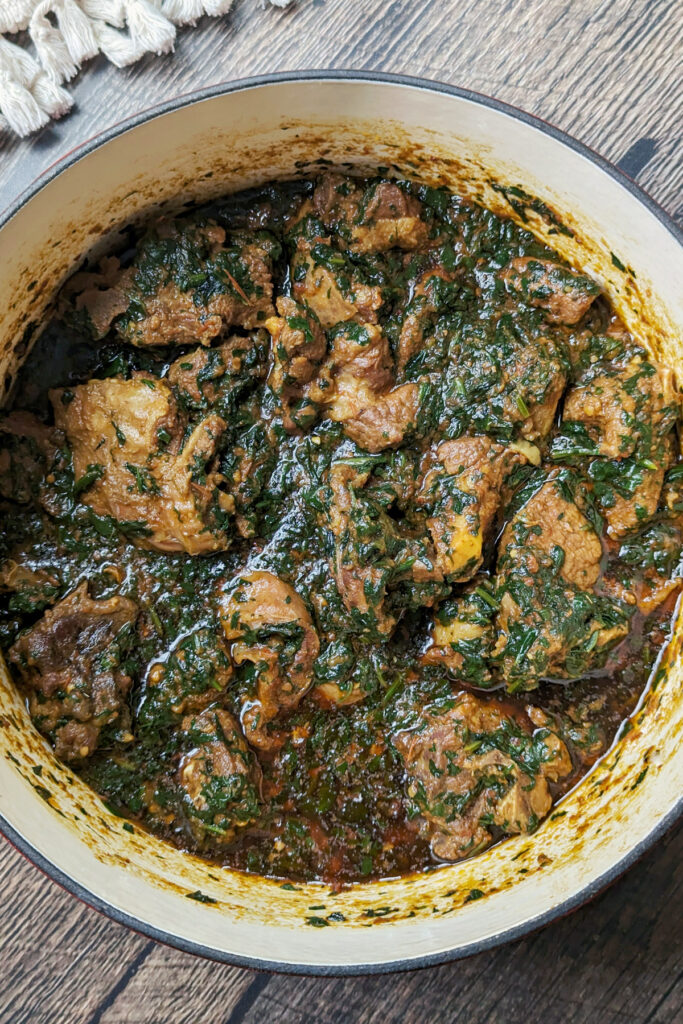
Step 5: Taste and season with salt, and stir in the garam masala and dried fenugreek leaves. Enjoy!
Tips for Making Palak Gosht
- Unlike many of our recipes, this one has a range for cooking time. Goat and lamb take longer to become tender, and the time is affected by various factors such as where you purchased the meat and how fresh it is.
- For those at higher elevations, you will likely need to cook the goat or lamb longer to become tender.
- I rely on a cooking technique called ‘bhunning’ for this recipe. During the cooking process, the goat tenderizes in a Dutch oven. Then, the meat fries in the pan with onions, garlic, ginger, and spices until it reduces and the ghee escapes to the sides, resulting in a highly concentrated and flavorful meal.
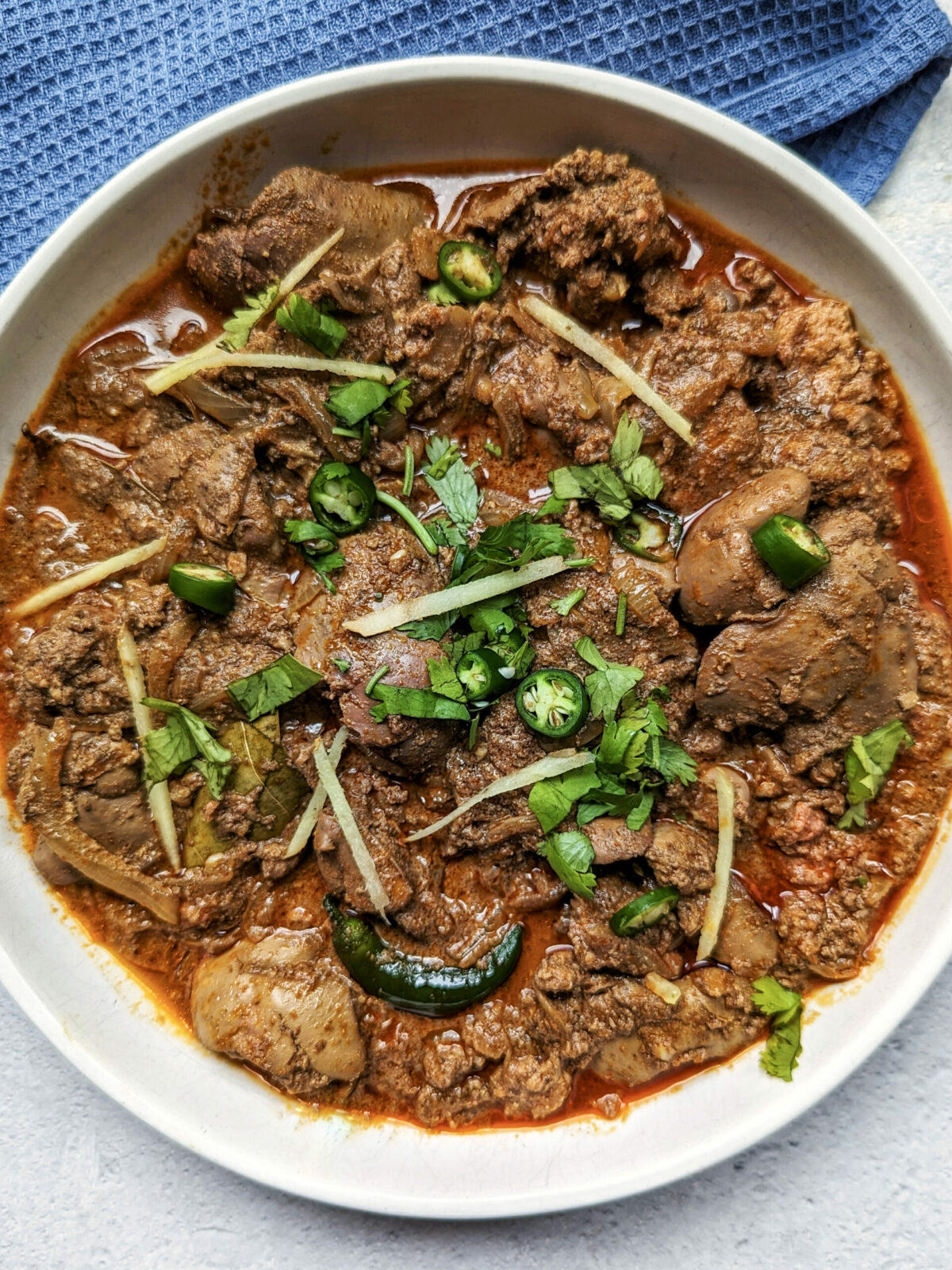
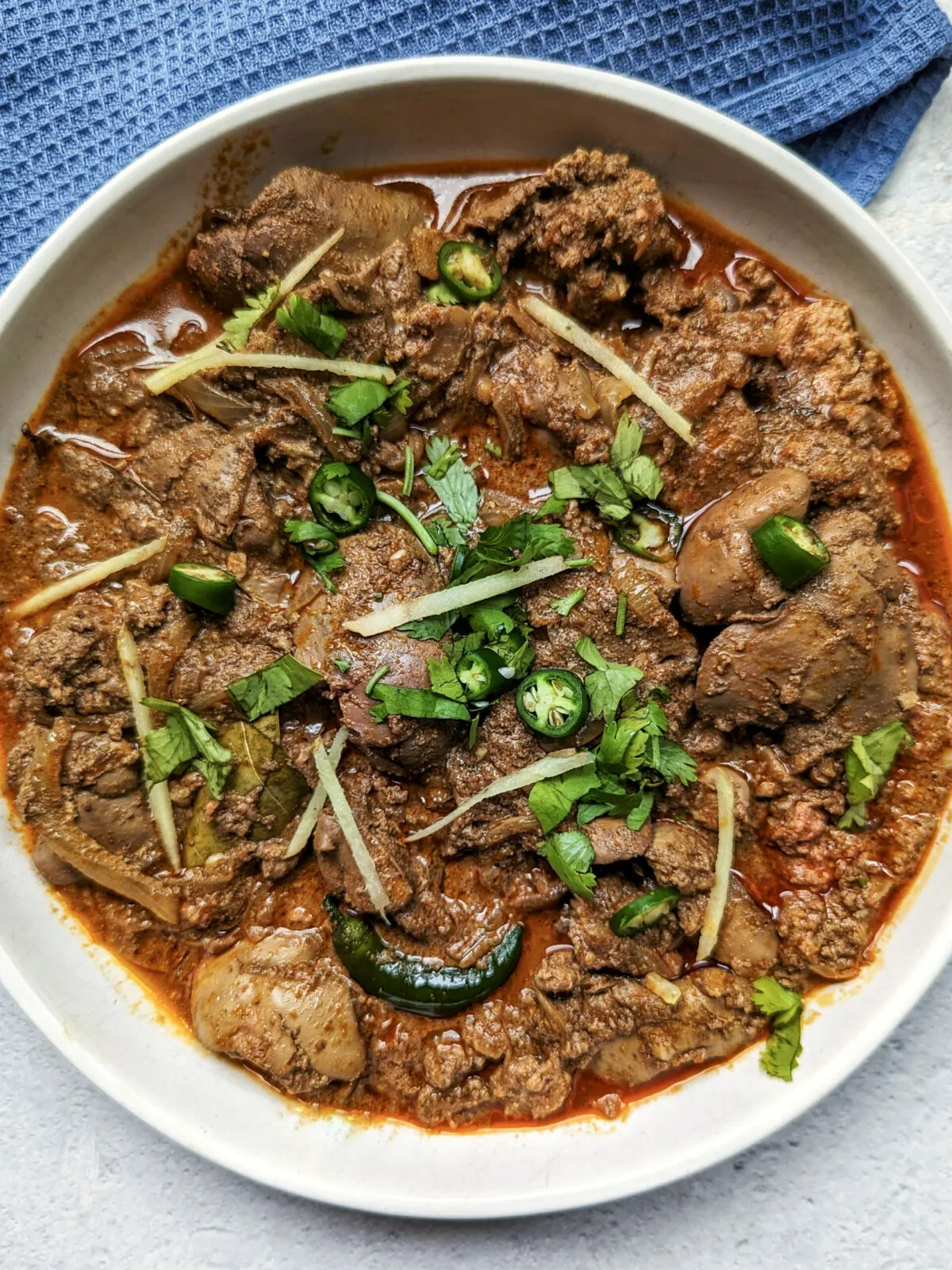
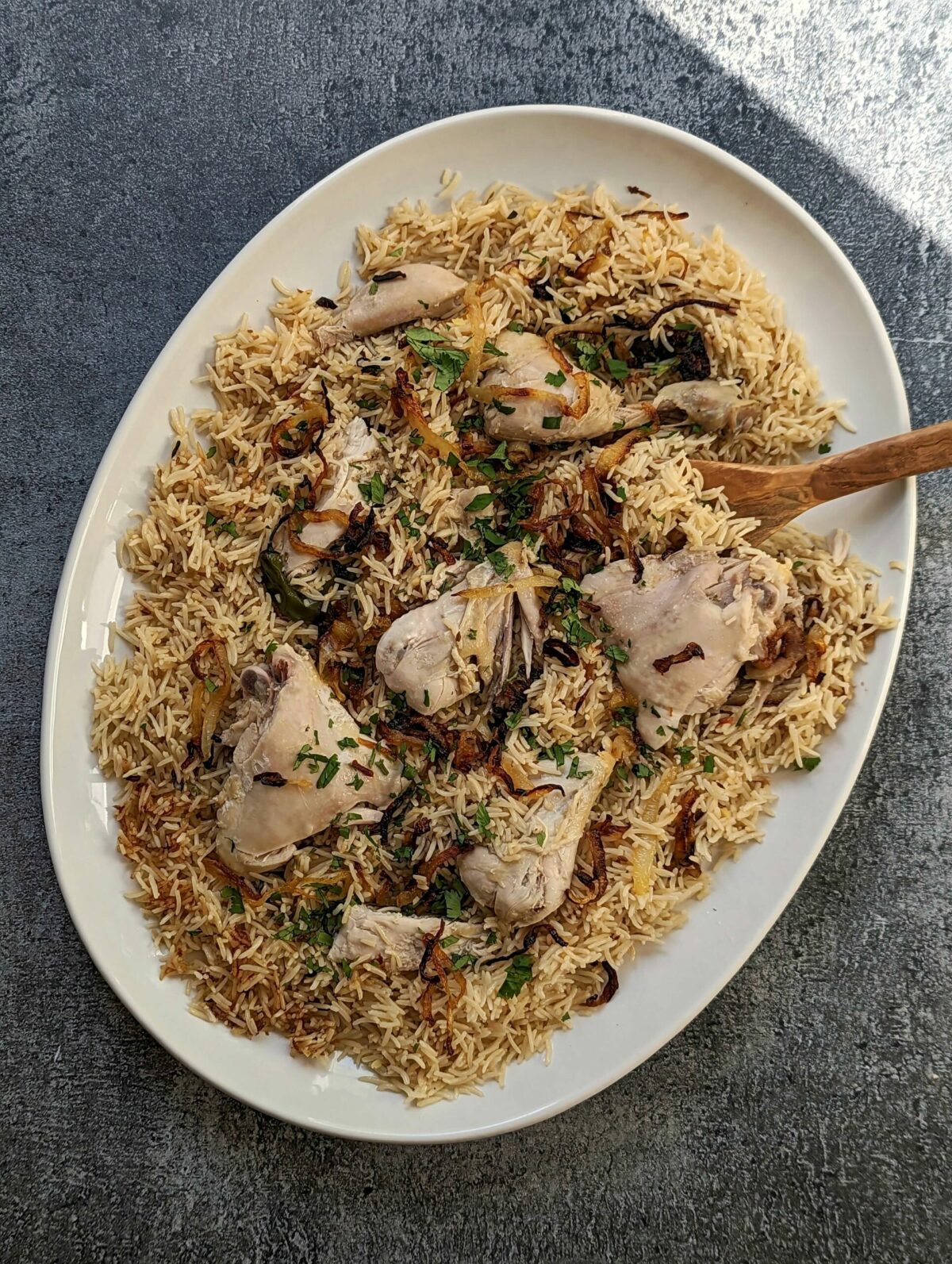
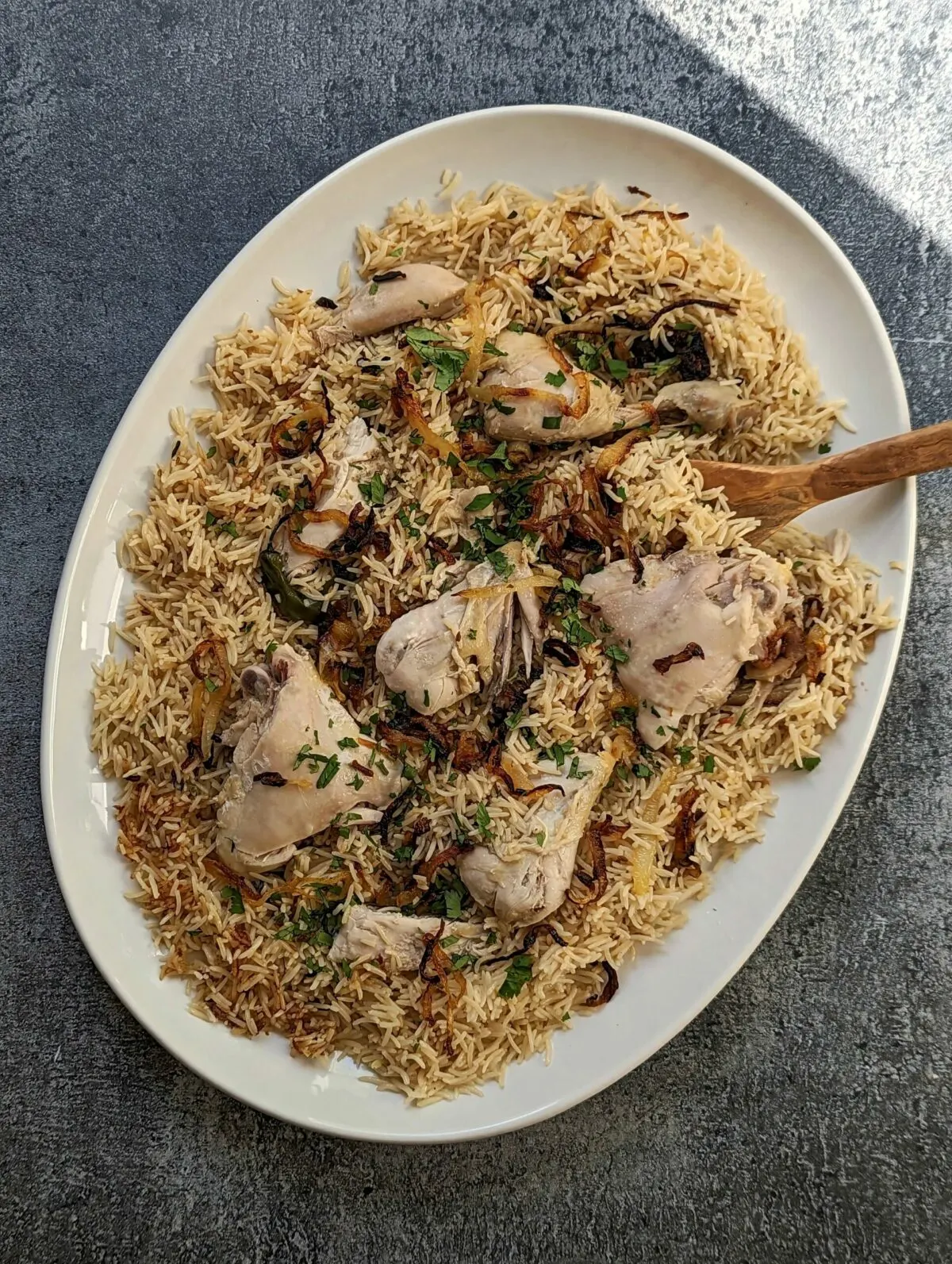
If you enjoy this recipe, try one of these Pakistani favorites!
Serving Suggestions
Serve the piping hot palak gosht with warm chapati or naan for a hearty home-cooked meal. However, I hear that once you try this recipe with boiled rice like jeera or plain basmati rice, there is nothing like it. If you prefer something lighter, try kachumber salad.
What to do with the Leftovers
- Refrigerate – Store the leftovers in an airtight container for 3-4 days.
- Freeze – Let the dish cool completely, and transfer it to a freezer-safe container. Palak gosht freezes for up to 2 months.
- Thaw – Defrost the leftover meat in the refrigerator overnight.
- Reheat – Warm the leftovers on the stovetop, and prepare your rice or naan.
Frequently Asked Questions
What is gosht curry made of?
Gosht curry is a type of curry made with gosht, which means lamb or mutton. Make the curry by simmering gosht in a thick gravy crafted from caramelized onions, tomato, garlic, ginger, warm spices, and lots of fresh spinach.
What cut of mutton to use?
Like karahi gosht, I use bone-in leg or shoulder from a lamb or goat, and cut it into 1½-2 inch pieces.
How much spinach to use?
For the best flavor, I recommend using one pound of fresh spinach in this recipe. You can use a bit less if you prefer a milder spinach taste. I don’t recommend frozen spinach, as it releases more water during cooking which dilutes the flavor. The extra water content also increases the cooking time.
More Gosht Recipes:
Authentic Pakistani Palak Gosht
- ½ cup ghee
- 2 medium onions, thinly sliced
- 4 garlic cloves, minced
- 1 tablespoons ginger paste
- 3 tomatoes, finely diced
- 1 tablespoon salt
- 1 tablespoon Kashmiri chili powder
- 1 teaspoon lal mirch powder
- 1 teaspoon coriander powder
- ½ teaspoon turmeric
- 3 pounds goat meat, bone-in, cut into 1½-2 inch pieces
- 2-3 green chiles
- 2-3 cups water
- 1 pound spinach, rinsed, chopped, and drained
- 1 teaspoon dried fenugreek leaves
- 1 teaspoon garam masala
- Warm the ghee in a Dutch oven over medium heat. Add the onions and cook until they turn golden brown, for about 20-25 minutes.
- Stir in the fresh garlic and ginger paste and saute for one minute. Then, add the tomatoes, salt, Kashmiri chili powder, lal mirch powder, coriander powder, and turmeric. Increase to medium-high heat and cook for 5 minutes.
- Nestle the goat and green chilies into the pot and cover with water. Cook until the water dries and the goat is tender for 1- 1½ hours. You will see the ghee escaping to the sides; this is your sign to add the spinach.
- Add the spinach and cook (bhunify) until any water released from the spinach dries, for about 10 minutes, until the ghee separates again.
- Taste and season with salt, and stir in the garam masala and dried fenugreek leaves. Enjoy!
- Unlike many of our recipes, this one has a range for cooking time. Goat and lamb take longer to become tender, and the time is affected by various factors such as where you purchased the meat and how fresh it is.
- For those at higher elevations, you will likely need to cook the goat or lamb longer to become tender.
- I rely on a cooking technique called ‘bhunning’ for this recipe. During the cooking process, the goat tenderizes in a Dutch oven. Then, the meat fries in the pan with onions, garlic, ginger, and spices until it reduces and the ghee escapes to the sides, resulting in a highly concentrated and flavorful meal.
- The nutritional information shown is an estimate provided by an online nutrition calculator. It should not be considered a substitute for professional advice.