
Bring the flavor of your favorite Middle Eastern restaurant home with this easy-to-make toum recipe. A generous amount of garlic, oil, and fresh lemon juice makes the perfect condiment to pair with chicken dishes, grilled vegetables, sandwiches, and wraps.
If you’re interested in another variation, try sos czosnkowy, a Polish garlic sauce.
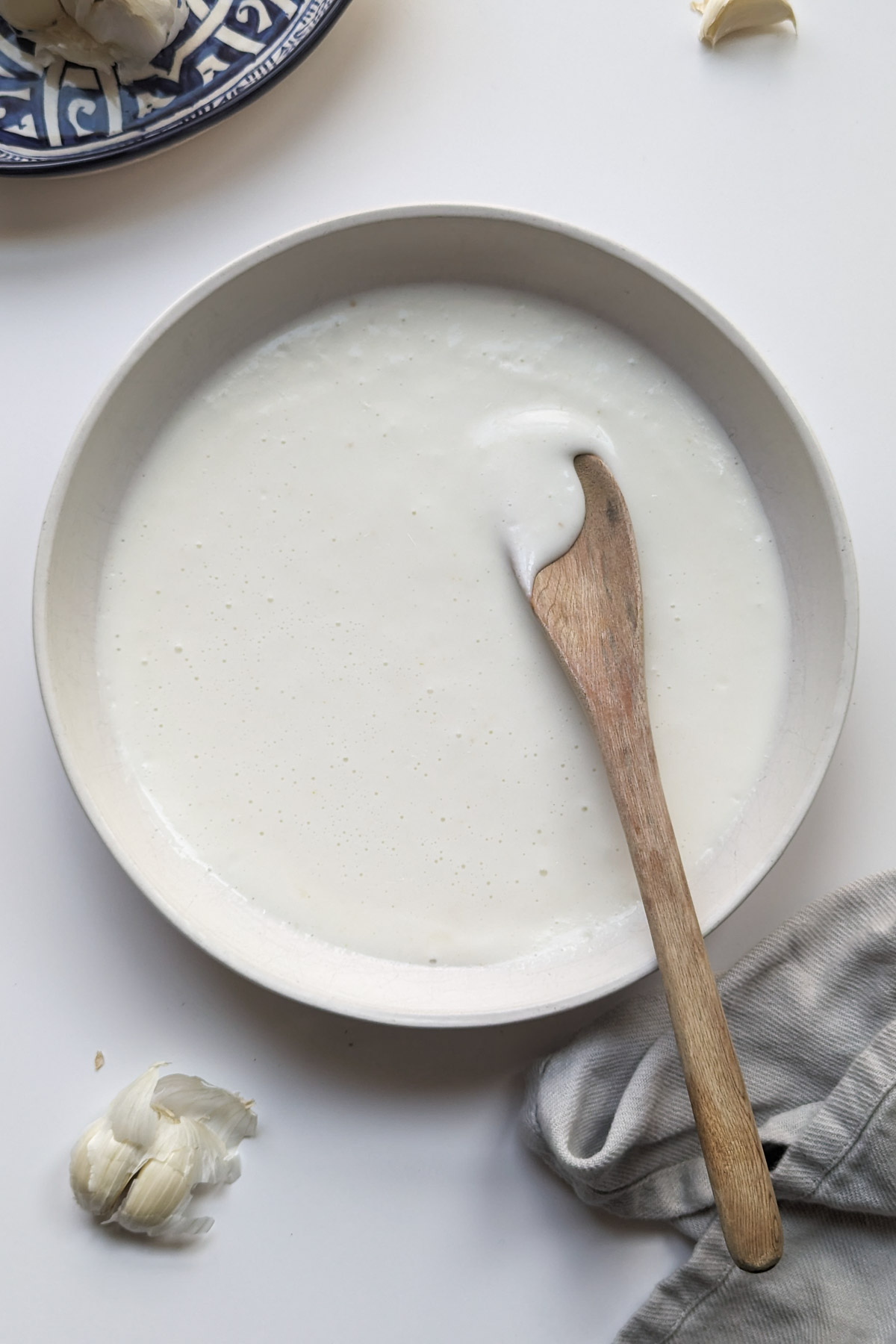

Why You’ll Love This Recipe
- If you’re a garlic lover like me, you’ll want to put the creamy spread on absolutely everything!
- The toum recipe uses four simple ingredients: garlic, salt, oil, and lemon juice.
- Like skhug or chimichurri, this creamy garlic sauce is a great way to enhance basic meals and take them to the next level.
What is Toum?
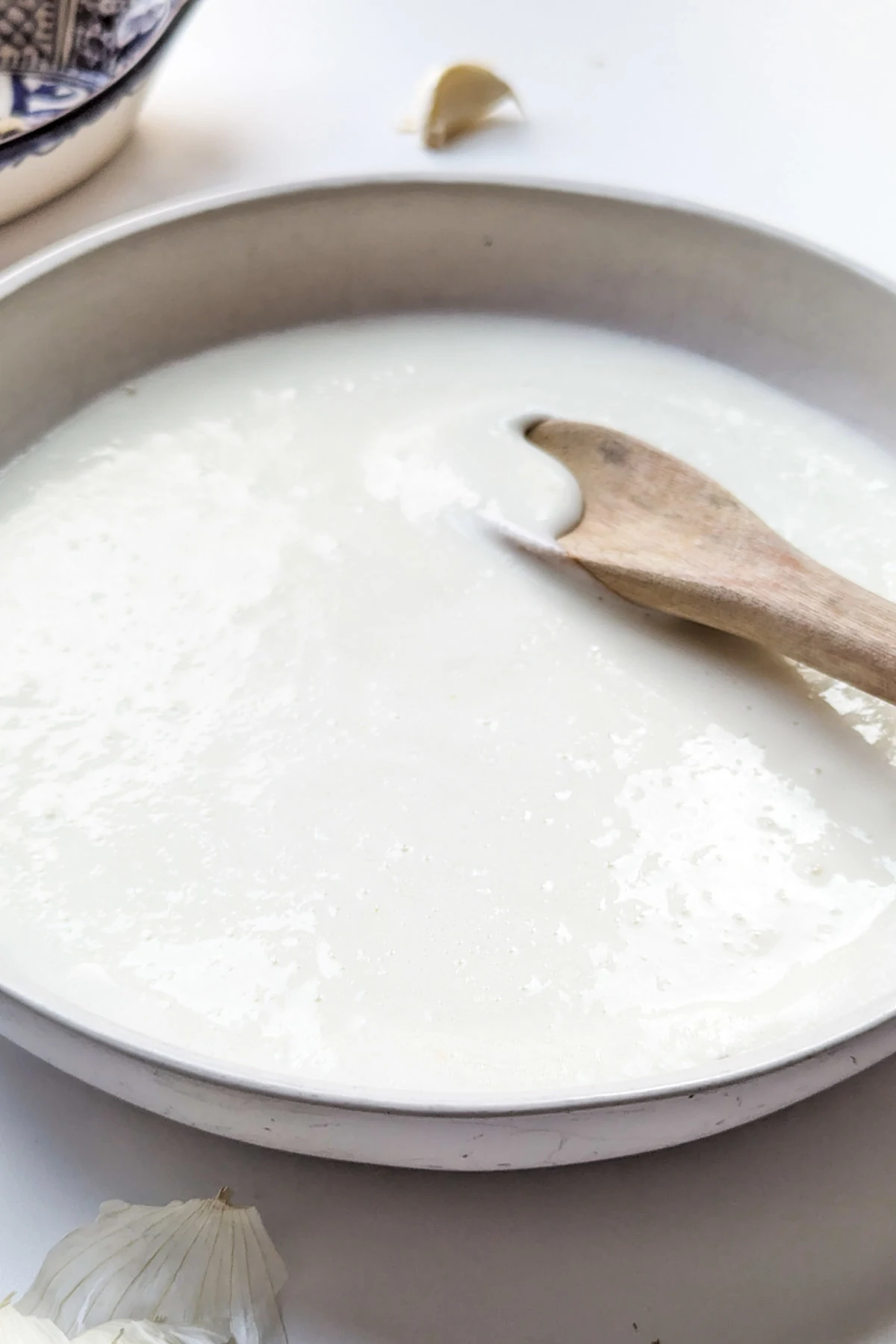
Toum, or Lebanese garlic sauce, is a thick and creamy sauce similar to aioli or mayonnaise. Make toum from the freshest garlic cloves, oil, and lemon juice. It’s a hugely popular Middle Eastern condiment you can serve with meals like chicken shawarma, falafel, and shish tawook. And in case you’re wondering, the name toum, pronounced ‘toom,’ means garlic in Arabic – which is fitting.
Ingredients You’ll Need
- Garlic: I a whole head of garlic, but measure with your heart. For easy preparation, use this silicone garlic peeler. It cuts the time in half.
- Salt: Feel free to adjust the salt to your preference.
- Oil: Use a neutral oil like canola oil, vegetable oil, safflower oil, avocado oil, or grapeseed oil to give toum its creamy texture and flavor. You can use olive oil, but it will change the color of the sauce.
- Lemon Juice: Freshly squeezed lemon juice adds a bright and tangy flavor to the sauce.
Tools Used to Make this Recipe
All you need to make this easy toum recipe is a food processor or blender, and a silicone spatula. Be sure the blender you use allows you to pour oil into the blender while it is processing so the sauce has a nice, creamy consistency.
How to Make Toum
The full recipe with measurements is in the recipe card below.
Step 1: Peel the garlic cloves and add them to a food processor or blender with kosher salt and lemon juice. Process until the garlic is finely minced, stopping to use a silicone spatula to push the garlic down toward the bottom.
Step 2: While the food processor is running, slowly add ¼ cup of oil in a thin stream with a steady hand. Then, slowly add one tablespoon of ice water.
Step 3: Continue adding the oil, ¼ cup of oil at a time, while the processor is running, followed by a tablespoon of ice water until you incorporate all the oil; this should take about 10 minutes.
Tip: Slowly adding the oil is crucial for creating the emulsion that gives toum its creamy texture. Adding the cold water in between helps prevent the emulsion from breaking.
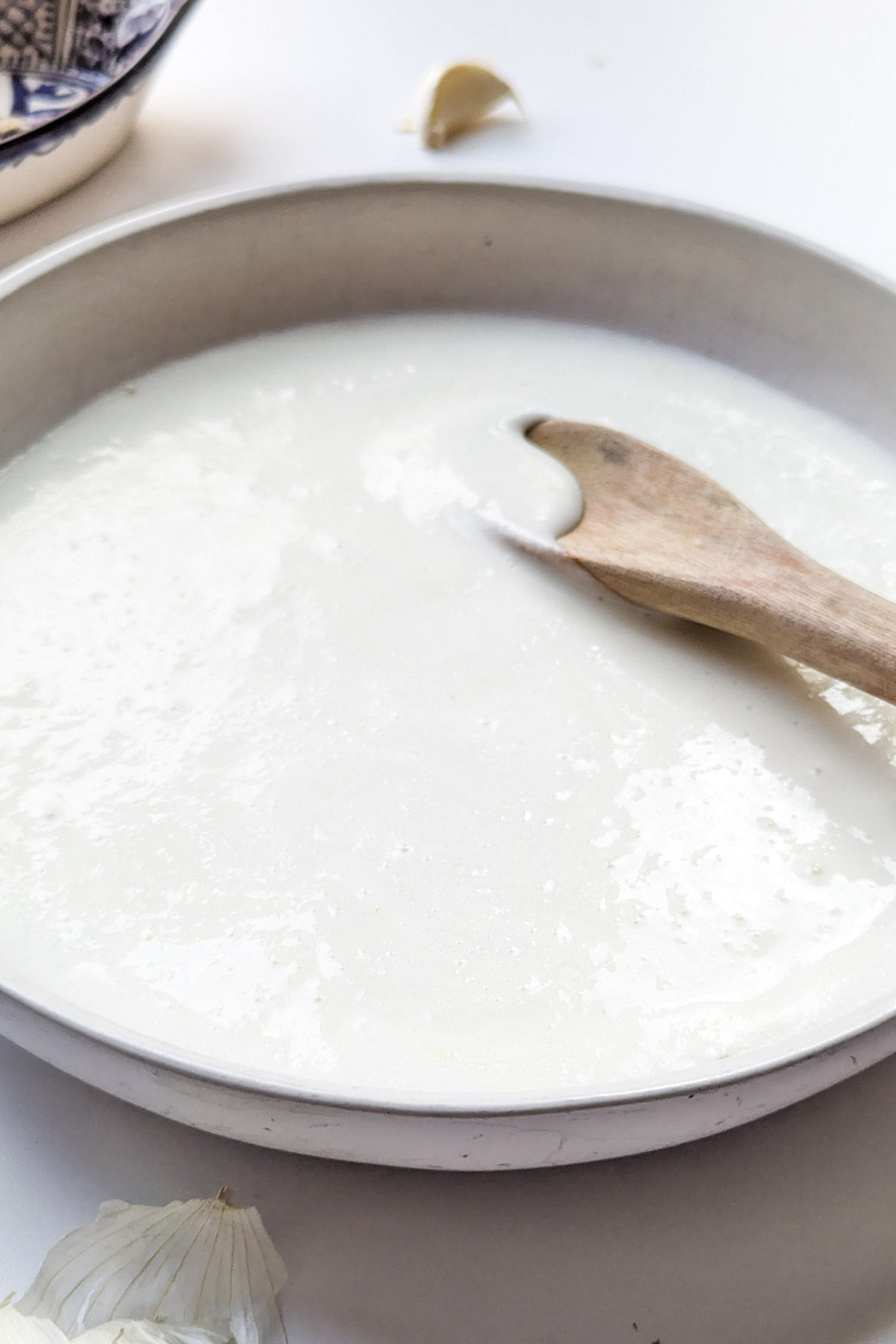
Step 4: Pour the sauce into a serving dish or jar. Taste and season with salt, and enjoy!
Expert Tips
- For the best results, you can take the time to remove the green sprout (garlic germ) from inside the garlic clove. The extra step isn’t necessary, but it results in a more flavorful sauce.
- Ensure that all ingredients are at room temperature before starting. Cold ingredients can make it more challenging to achieve a proper emulsion.
- When combining the oil with the other ingredients, add it gradually and in a slow, steady stream while the food processor is running; the gradual addition helps to achieve a stable emulsion (the two liquids combine and don’t separate).
How to Save a Failed Sauce
Occasionally, the sauce will break and end up thin and runny. If that happens, don’t panic! You can rescue it. Start by whisking egg whites (from one egg) in a bowl with a small amount of the sauce, then slowly pour the mixture into the sauce while continuing to whisk to help it thicken. If it’s still too thin, add a small amount of oil while slowly blending with a food processor or immersion blender.
Searching for More Like This?
If you love this recipe, pair it with one of these dinner favorites!






Serving Suggestions
Toum is an easy way to flavor simple meals like rotisserie chicken because of its delicious garlicky flavor. For dipping, reach for warm pita bread, pita chips, or fresh vegetables like carrots and cucumber. The creamy Lebanese garlic sauce is my favorite way to enjoy falafel, chicken dishes, beef kabobs, rice pilafs, fries, and sandwiches or wraps.
What to do With the Leftovers
- Refrigerate – Store the leftovers in an airtight container for 2-3 months, thanks to the fresh lemon juice and fresh garlic.
Frequently Asked Questions
What does toum taste like?
Toum is a tangy condiment with a smooth texture and a robust garlic flavor.
What’s the difference between toum and aioli?
Toum and aioli have many similarities, but I think Toum has a stronger flavor. The traditional aioli recipe only uses garlic and oil, but most modern recipes also include egg yolks. In contrast, toum only requires garlic, oil, salt, and lemon juice.
What type of oil is best to use?
You want to use a neutral oil like sunflower, canola, vegetable, grapeseed or safflower oil.
More Sauce Recipes:


Toum
- 1 head garlic, (12 cloves)
- 1-2 teaspoons kosher salt
- 1 lemon, juiced
- 1¾ cup neutral oil
- 4-6 tablespoons ice water
- Peel the garlic cloves and add them to a food processor or blender with kosher salt and lemon juice. Process until the garlic is finely minced, stopping to use a silicone spatula to push the garlic down toward the bottom.
- While the food processor is running, slowly add ¼ cup of oil in a thin stream with a steady hand. Then, slowly add one tablespoon of ice water.
- Continue adding the oil, ¼ cup of oil at a time, while the processor is running, followed by a tablespoon of ice water until you incorporate all the oil; this should take about 10 minutes. Tip: Slowly adding the oil is crucial for creating the emulsion that gives toum its creamy texture. Adding the cold water in between helps prevent the emulsion from breaking.
- Pour the sauce into a serving dish or jar. Taste and season with salt, and enjoy!
- I have been using this toum recipe from The Mediterranean Dish for years.
- For the best results, you can take the time to remove the green sprout (garlic germ) from inside the garlic clove. The extra step isn’t necessary, but it results in a more flavorful sauce.
- Ensure that all ingredients are at room temperature before starting. Cold ingredients can make it more challenging to achieve a proper emulsion.
- When combining the oil with the other ingredients, add it gradually and in a slow, steady stream while the food processor is running; the gradual addition helps to achieve a stable emulsion (the two liquids combine and don’t separate).
- The nutritional information shown is an estimate provided by an online nutrition calculator. It should not be considered a substitute for professional advice.